
How to Teach a Child to Read a Cloud (Includes Free Field Cards)
My children can name more clouds than dinosaurs. The clouds are directly above our heads every single day, and we should notice them.
We hand children a poster with four clouds on it, they memorize the words, and nothing changes. They still walk under a sky they cannot read. The problem is not the child. The problem is that we taught them the names before we taught them to look.
The heavens declare the glory of God; and the firmament sheweth his handywork. — Psalm 19:1, KJV
Here is what we do instead. It costs nothing and takes five minutes.
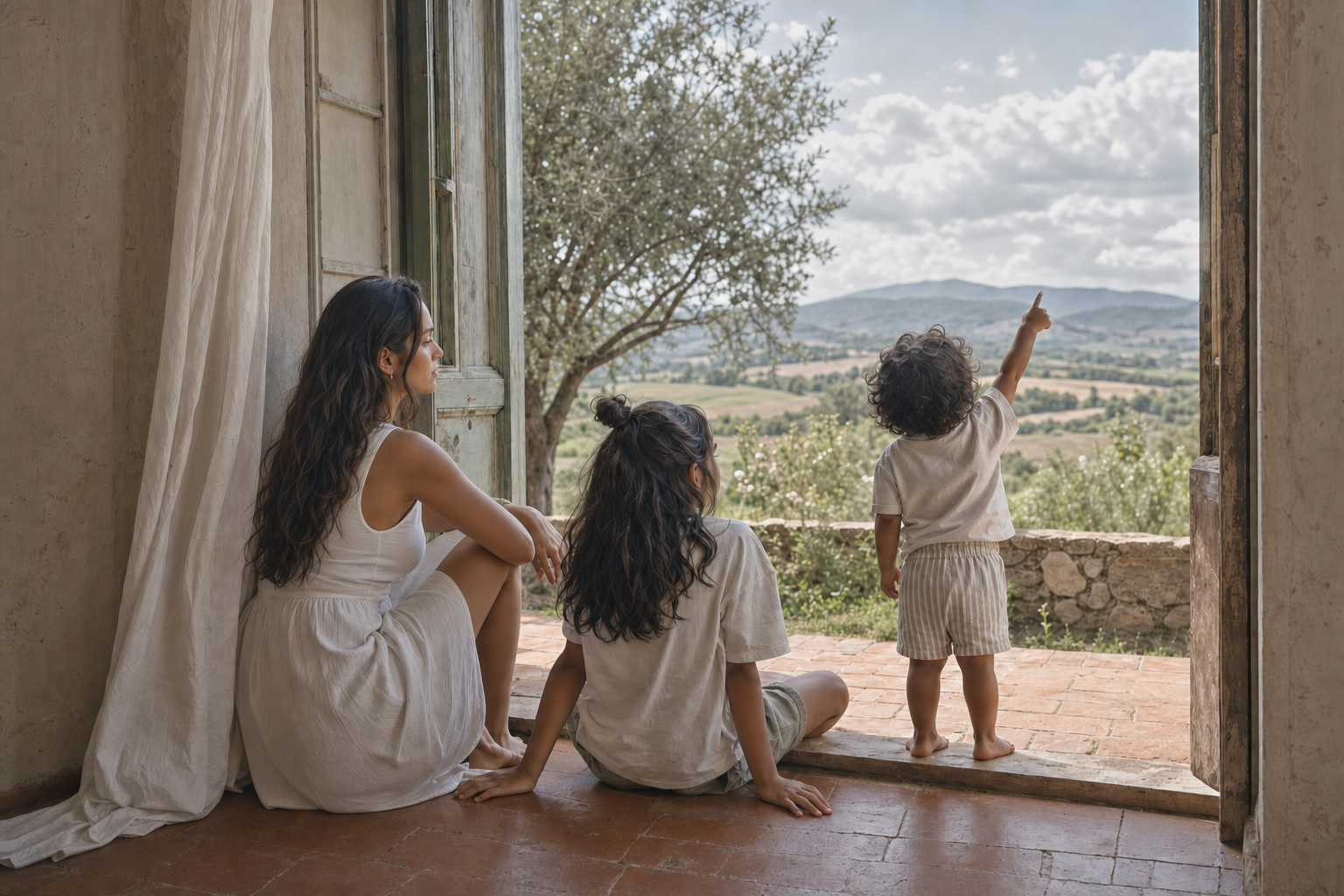
Start With One Cloud, and Watch It
Consider the lilies how they grow. — Luke 12:27, KJV
Go outside and don’t name anything. Ask your child to choose one cloud — any cloud — and line it up against something that does not move. A chimney, the top of a tree, or the corner of a roof. That fixed thing is the whole trick, because without it you can only say that a cloud moved. With it, you can say where it went.
Then sit down. Five minutes is much longer than you think.
Here is what usually happens, and it is the best thing about this whole exercise: the cloud does not survive the five minutes. It comes apart at one edge while it builds at the other. Sometimes it disappears entirely while you are looking straight at it.
Which teaches the thing a poster never can: a cloud is not an object. It is something happening — water turning into cloud and cloud turning back into air, over and over, while the whole of it drifts. You cannot point at the same cloud twice.
My oldest son’s first cloud was gone before the timer went. He was indignant. I have never seen him look at the sky the same way since.
The Four Worth Knowing
He causeth the vapours to ascend from the ends of the earth. — Psalm 135:7, KJV
© 2026 Joanna Colomas
This is part of Above Our Heads nature study and is copyrighted
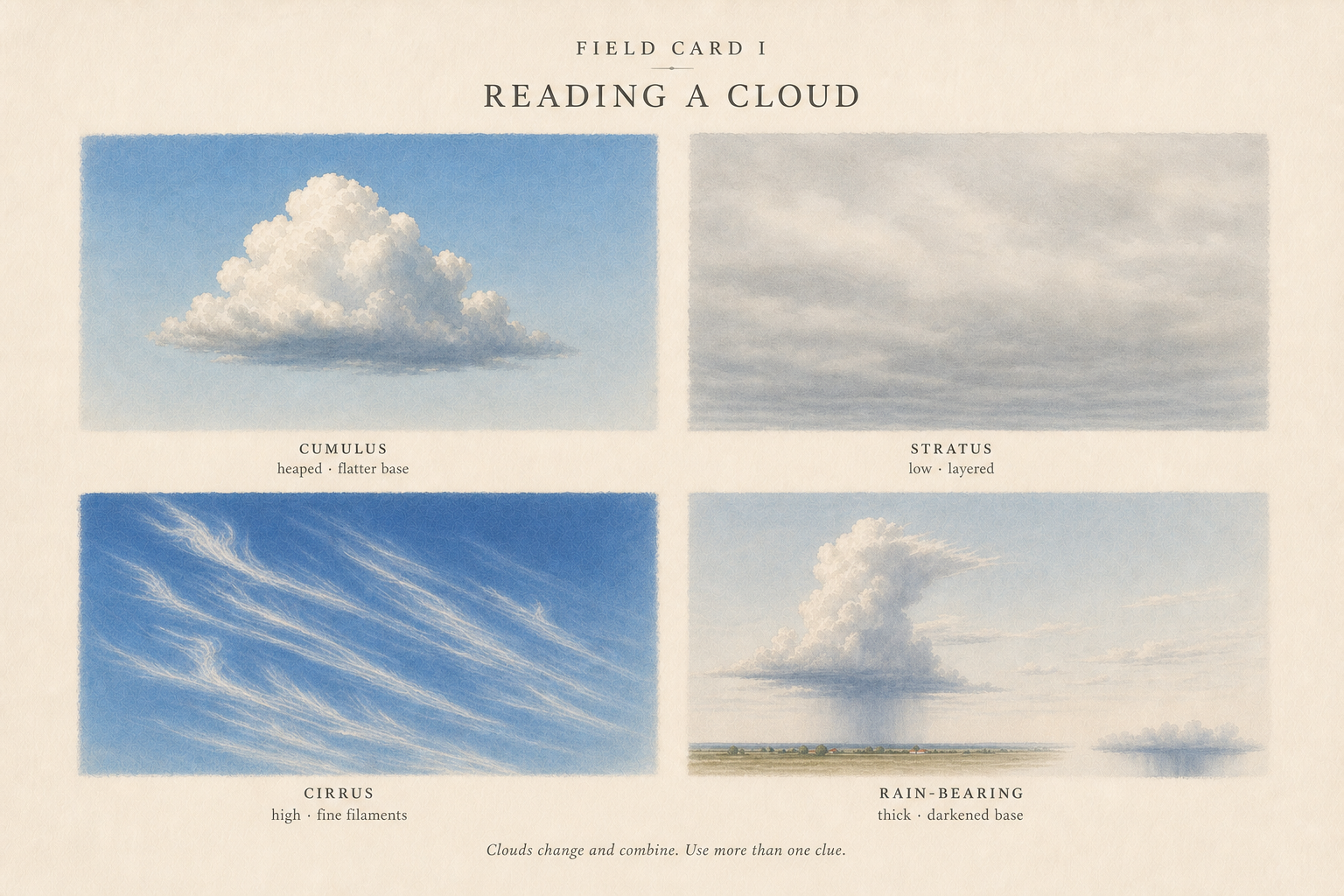
Weather services use ten cloud names. Your children need four, and these four will carry them a very long way.
Cumulus is the heaped one. Lumps and mounds, brilliant white where the sun hits and grey underneath, with a base that looks as though it has been cut off flat. That flat bottom is the giveaway. They build upward through a warm afternoon and fall apart again toward evening. What to notice: whether the tops are still climbing. A cumulus that keeps growing all afternoon may not stay a cumulus.
Stratus is the flat one. One grey sheet, low down, with no shape to speak of. It is the cloud that makes a day feel closed in. If it comes all the way down to the ground, it is fog — which delights children far more than it should. What to notice: how low it sits against a hill, a tower, or the top of a tall tree.
Cirrus is the high one. Wisps and streaks so far up they are made of ice rather than water. They often arrive a day or so before the weather changes, which is why people watched for them long before anyone had a forecast. What to notice: which way the ends are combed. That is wind at a height your child will never feel.
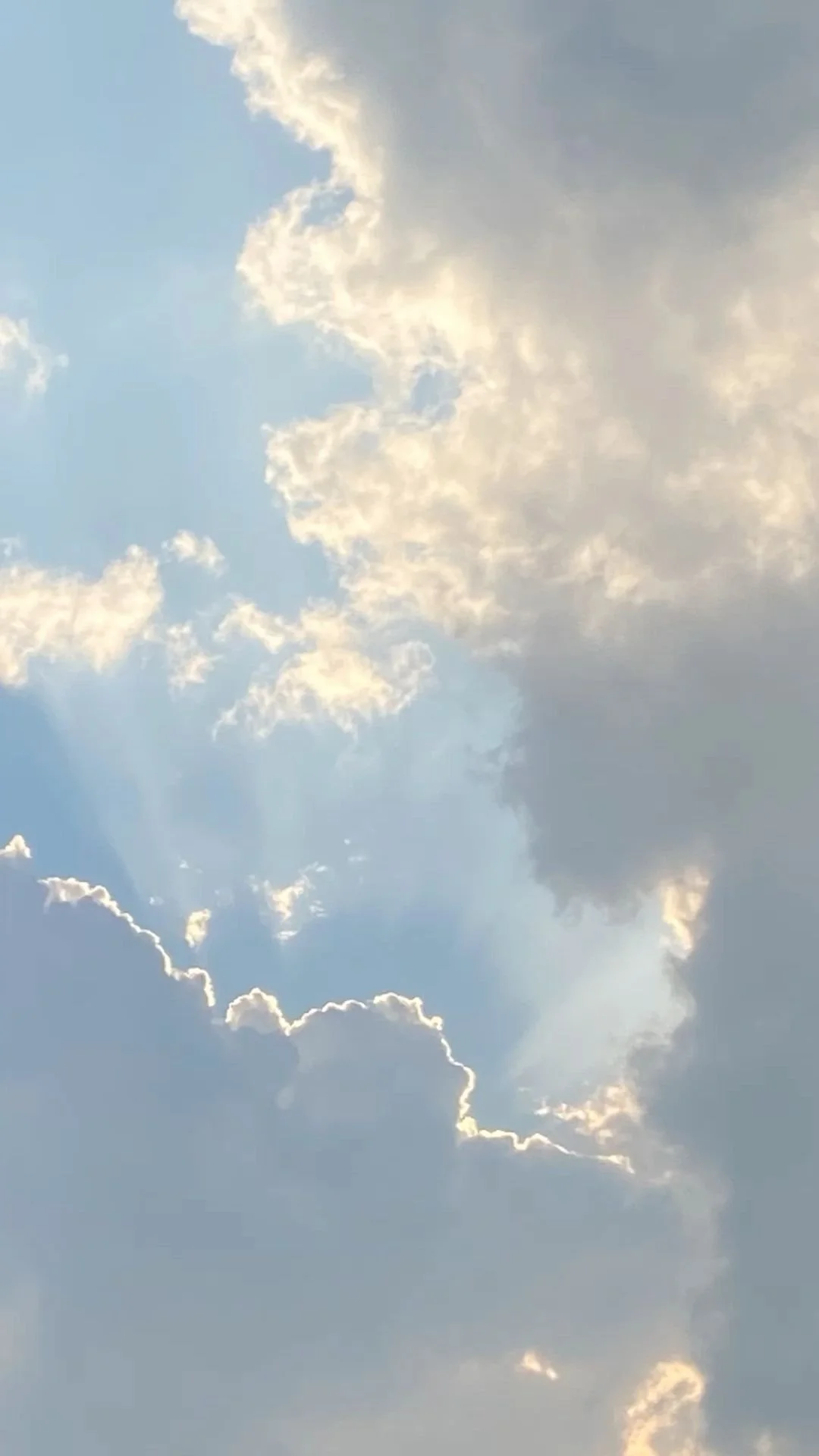
And the rain-bearing kind. Two clouds carry most of the rain. One is a great tower, dark underneath and hard-edged on top. The other is a thick low sheet that has closed the whole sky and settled in for the afternoon.
One correction worth making, because it is the commonest mistake: nimbus is not a cloud. It means rain, and it lives inside the names of the two great rain-makers. And no cloud is a promise. Rain falls from clouds that are none of these. Read several signs together, or read none at all.
Note: The firmament is not ours to remake. Throughout history, people have often believed they could improve what God had already declared good, only to discover the limits of their wisdom. Our first calling is not to reshape creation but to steward it faithfully. Whenever people propose changing the natural world on a large scale, such ideas deserve thoughtful examination rather than unquestioning acceptance. Learning to observe carefully, ask honest questions, and respect the order of creation is one of the reasons this guide exists. Before we seek to change the world around us, we should first learn to know it, understand it, and receive it with humility and gratitude. It is difficult to care rightly for a world we have never first learned to see.
How Much Sky Is Covered
Who covereth the heaven with clouds. — Psalm 147:8, KJV
© 2026 Joanna Colomas
This is part of Above Our Heads nature study and is copyrighted
This is my favourite part, and it takes about a minute to teach.
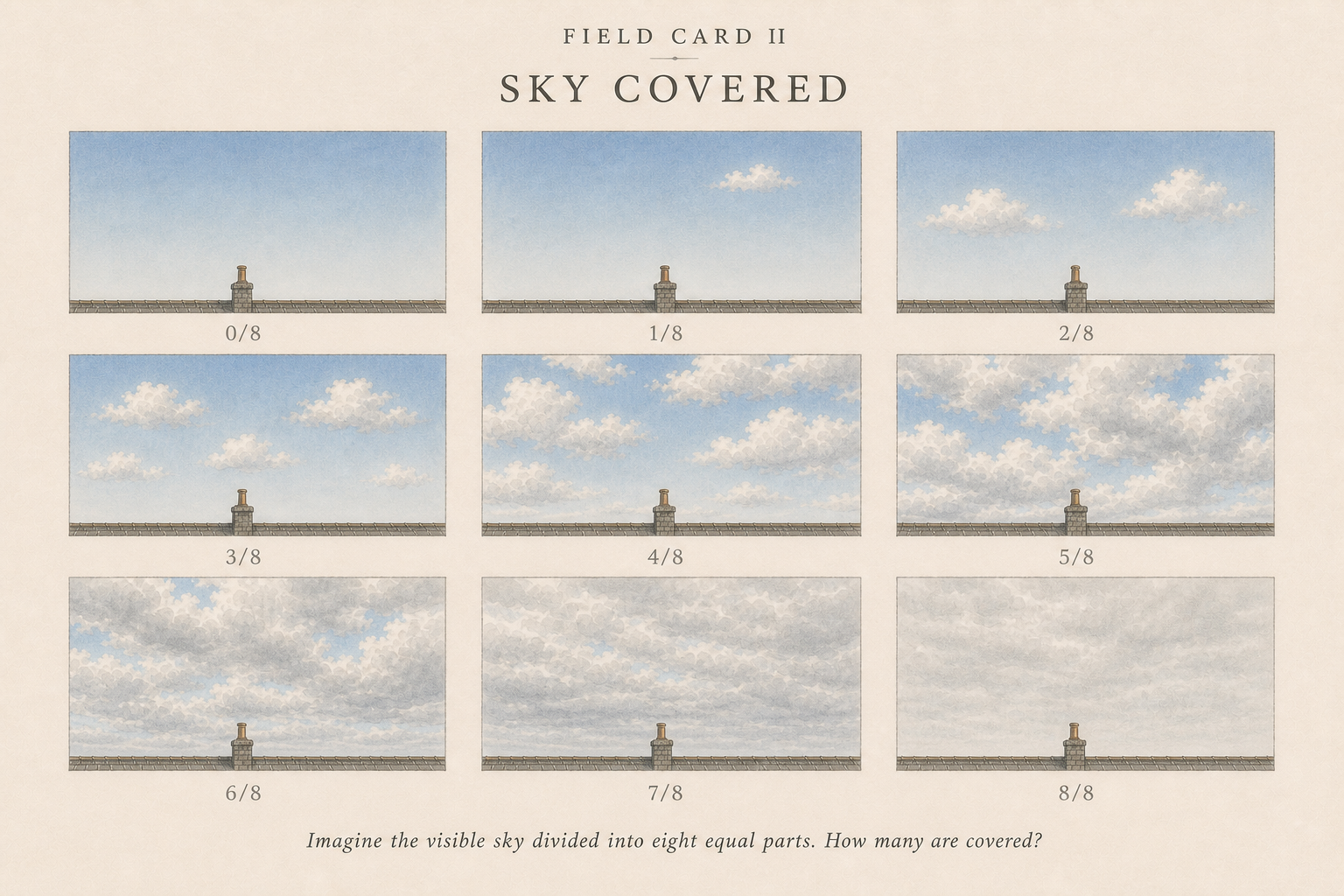
Split the sky into eight in your head. Count the parts with cloud in them. That number is what weather services around the world actually record — which means a child's notebook and a national forecast are saying the same thing in the same language.
Nought is clear. One or two, a few. Three or four, scattered. Five to seven, broken. Eight, overcast.
That is the whole system. A six-year-old can do it from a doorstep in ten seconds, and after a fortnight of doing it they will start telling you the number before you ask.
The Mistake to Avoid
Every good gift and every perfect gift is from above. — James 1:17, KJV
Do not name it first.
I know. It is very hard. The child looks up, you know the word, and the word is right there in your mouth. But a name given too early closes the looking down. Once a cloud is a cumulus, it stops being a thing that is coming apart at one edge and becomes a label that has been correctly applied. The watching is over.
So let the wrong guess stand. Let them call it a dragon, a country, a pile of washing. The second look will correct it far better than you can, and it will correct it in a way that stays.
What do you see comes before here is what it is called. Always.
On the Tired Day, and the Wet One
© 2026 Joanna Colomas
This is part of Above Our Heads nature study and is copyrighted
An open window is a real observation post. So is a windowsill and ten minutes. You do not have to stage anything, and you certainly do not have to drive anywhere.
If it is raining, that is a lesson too — go and listen to it landing on four different things and ask which one is loudest. If the sky is completely white and featureless, write down eight, overcast and go back inside. That is a real record. Some of the most useful pages in a weather notebook say almost nothing.
This should lift the load off your day. Never add to it.
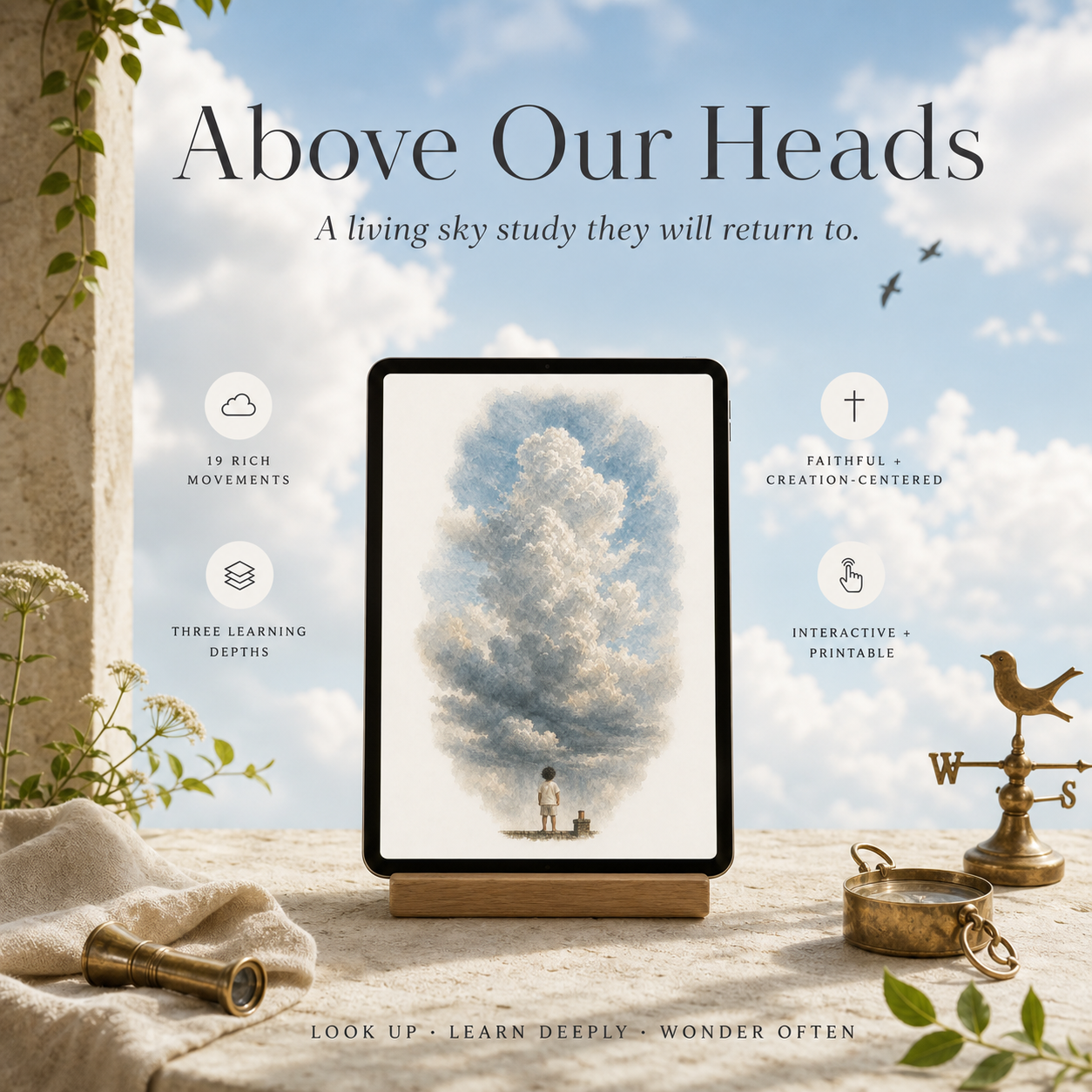
Above Our Heads is my sky study for ages 4 to 14 — different levels, all included.
18 movements, mostly outdoors, with a Cloud Gallery, ten pocket field cards and a printable field book.
Read more about it below
The sky has been there the whole time
Your child has walked under it every day of their life and has probably never once been shown what to look at. Not because you failed to teach it — because nobody teaches it. We name clouds on a poster and move on.
Above Our Heads does the opposite. Your child chooses a standing place they can reach in under a minute, and a fixed point that does not move — a tree, a chimney, the edge of a roof. Everything in the sky is then measured against it. Clouds pass it. Birds cross it. The moon sits above it or below it.
From that one small decision, eighteen movements unfold.
What your child becomes
Not a student filling in blanks — a keeper of the sky.
- Reads a cloud by its shape and its base, and knows which two carry the rain
- Estimates sky cover in eighths, the way weather services actually record it
- Finds the wind without feeling it, by what it is doing to everything else
- Reads the signs before rain and writes them down before the first drop
- Names a bird by how it flies when they cannot see its colors
- Knows what a feather is built from, and why the parts hook together
- Watches a nest from far enough away that the parents keep coming back
- Tells weather from climate, and knows why one can be watched and the other cannot
- Tracks the moon for a full month and then reads their own record back
- Waits twenty minutes in the dark and watches a sky fill with stars that were there all along
And underneath all of it — patience. The sky does not perform on demand. It teaches a child to wait, and that is the deeper subject of the whole experience.
The month-long one
On the first day, your child opens a strip of thirty circles. Every time they happen to see the moon, day or night, they fill one in and date it.
Nothing is explained. Nothing is taught.
Four weeks later, Movement XVII opens — and it teaches your child nothing about the moon. It asks them what their own strip already knows. The pattern was in their handwriting the whole time.
Nothing else in this book takes that long, and nothing else lands like it does.
What is inside
The Experience
The interactive edition, opening in any browser on any device. Eighteen movements, a menu you can reach from any page without losing your place, and an evening mode that turns the whole book dark for early mornings and night skies. Every observation your child makes is kept. Their sky records, bird records and moon strip build across weeks and are read back to them later in the book.
Ten field cards
Pocket cards to carry outdoors. Reading a cloud. How much sky is covered. What the wind is doing. Before rain. Shapes that cross. Wings and what they do. Inside a feather. Beaks and feet. Nests from a distance. The moon this month. Plus the keeper's code and one blank, because ten was never going to be enough.
The printed Field Book
Three A4 files to print and write in, with the ruled lines already on the page. Print what you will use and leave the rest.
Eighty original paintings
Every plate in this book was painted by hand for it.
For the parent
A short, calm word for you. How to help without turning it into school, plain safety, and what to do on the tired day.
Faith at the foundation, not the edges
The works of the Lord are great, sought out of all them that have pleasure therein (Psalm 111:2). Scripture runs through this as its source, not its decoration. Your child learns to receive creation with gratitude before ever asking what could be done to it — that observation comes before intervention, stewardship before control, and that human wisdom has limits. All Scripture is King James Version.
Built for real family life
The weather decides, not the page order. Use the weather door: if it is windy, do the wind. If the moon is up, do the moon. The linear path is there for anyone who wants it and it is not the only way through.
Bad weather? An open window is a real observation post. So is a windowsill and ten minutes.
More than one child? Three depths — Early Years, Curious Years, Capable Years — run through every movement, so a four-year-old points at a cloud while a twelve-year-old times it and names the family. One sky, several depths, shared.
No printer? The Doorway stands alone. The printables wait.
City sky? Every movement works from a doorstep, a balcony or a window. The book never promises a wilderness sky, because most families will never stand under one.
Watched, never disturbed
The keeper's code comes before the first movement, and almost every line of it is something your child does not do. Nests are watched from a distance that lets the parents keep coming back. Nothing is touched — not nests, not eggs, not chicks. Recorded bird calls are never played outdoors. A feather is drawn where it lies. Nobody looks at the sun, at any time of day, through anything.
Every safety statement and every scientific claim in this book was checked against national weather services, ornithological bodies and space agencies before it was written.
Works anywhere in the world
Nothing here depends on your hemisphere, your latitude or your season. No planets are named, because which ones are up depends entirely on the date. No wind direction is called cold. The moon wording works north or south of the equator. Your child learns their sky, wherever they are standing.
The details
- Format: 1 interactive edition (any browser, any device) + 4 print-ready A4 files
- Length: 18 movements · 10 field cards · 80 original paintings · a 30-night moon strip
- Ages: 4–14, with three built-in depths
- Scripture: King James Version throughout
- Subject: Sky, weather, clouds, birds, feathers, nests, light, the moon, first stars
- Use: Homeschool, Charlotte Mason and nature-study families, Christian education, summer learning, family field days
- Delivery: Instant digital access. No account, no app, nothing to install.
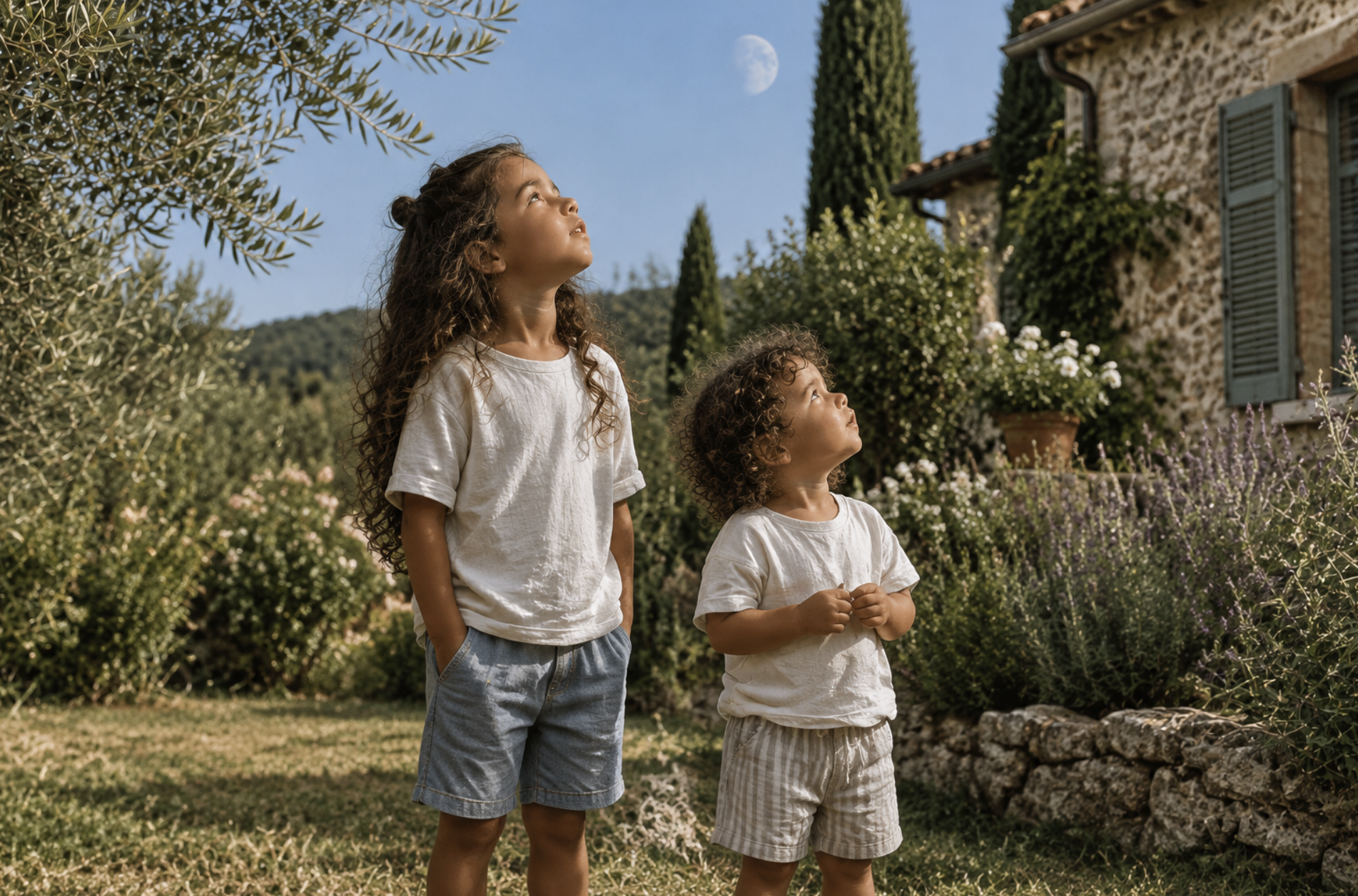
One enormous sky, and one small person underneath it with their head tipped back.
You Might Also Love…

You do not need a forest, a garden, or a car. You need a window that opens and somewhere to stand — and a city gives your children things a field never will.