
A Thirty-Night Moon Observation You Can Start Tonight (Free Printable)
There is a particular kind of nature study that finishes in an afternoon, gets stuck in a folder, and is barely ever thought of again. We have all bought them. I have bough a great many until I realized it’s not really made for free children but rather for school rooms, to be done seated on a chair.
This is not one of those.
It takes about a month, it cannot be hurried, and it is the only thing we have ever done that my children came and found me about.
He appointed the moon for seasons: the sun knoweth his going down. — Psalm 104:19, KJV
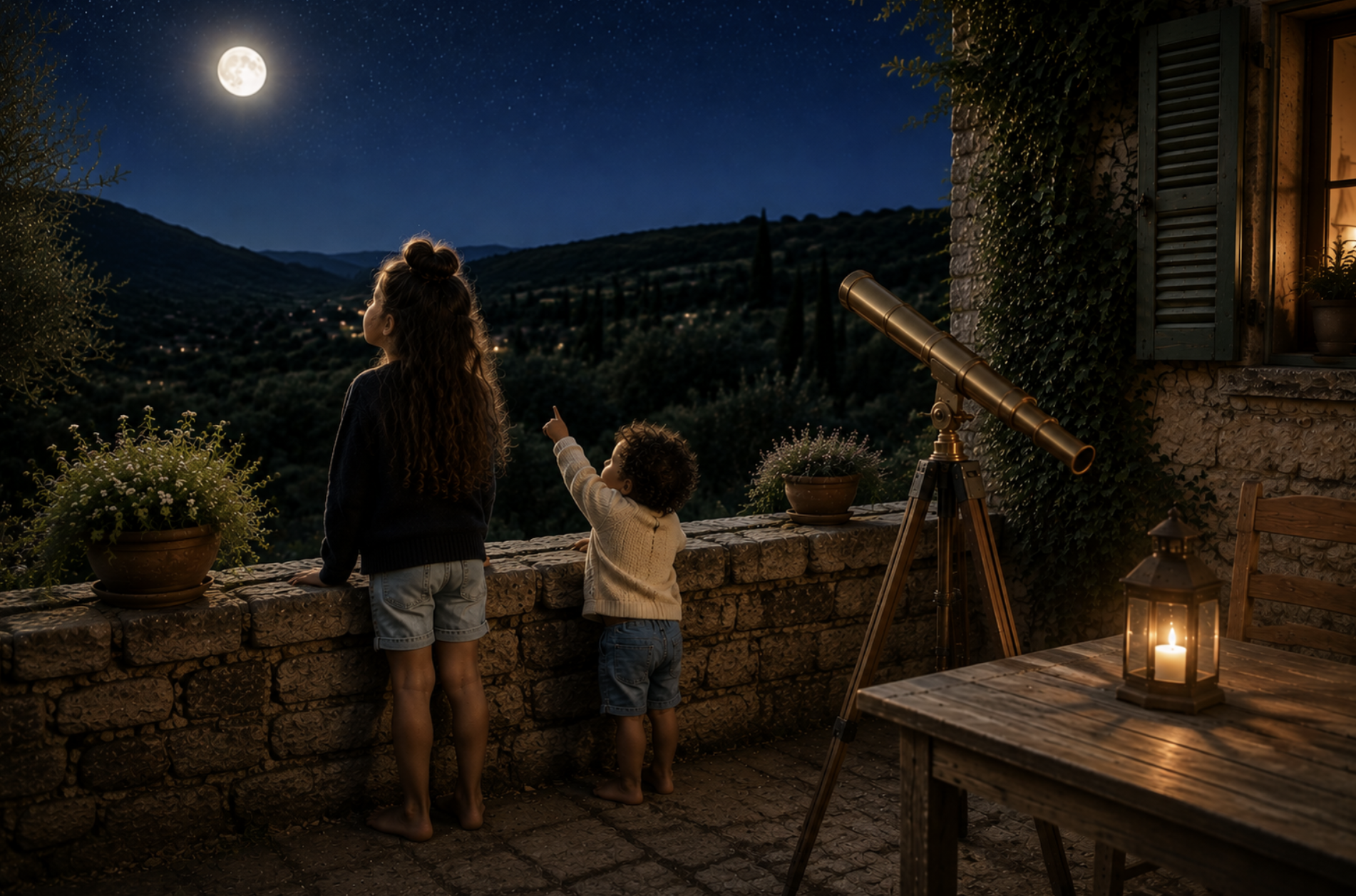
© 2026 Joanna Colomas
Why Thirty Circles and Not Seven
And God made two great lights... he made the stars also. — Genesis 1:16, KJV
Draw a row of thirty small circles on a strip of paper. That is the entire apparatus.
Seven will not do, and this is the reason so many moon activities quietly fail. One full round, new moon to new moon, takes about twenty-nine and a half nights. Anything shorter cannot show a cycle — it can only show a handful of unrelated shapes, which is exactly how most children come away from it.
Thirty circles. One date beside each. Nothing else.
How It Actually Works
The day is thine, the night also is thine. — Psalm 74:16, KJV
Here is the whole method, and I want to be honest that it barely qualifies as one.
Whenever you happen to see the moon — day or night — fill in one circle. Shade it to match what you can actually see, and write the date beside it. Then stop.
That is it. There is no lesson. There is nothing to look up. Nobody has to go outside at a particular hour, and nobody has to catch every night, because nobody manages that with children. Miss four in a row and the pattern still shows, because the shape your child drew carries its date with it.
I keep ours on the back of the kitchen door with a pencil on a string. It gets filled in somewhere between shoes going on and shoes coming off.
The One Most Children Are Never Told
Lift up your eyes on high, and behold who hath created these things. — Isaiah 40:26, KJV
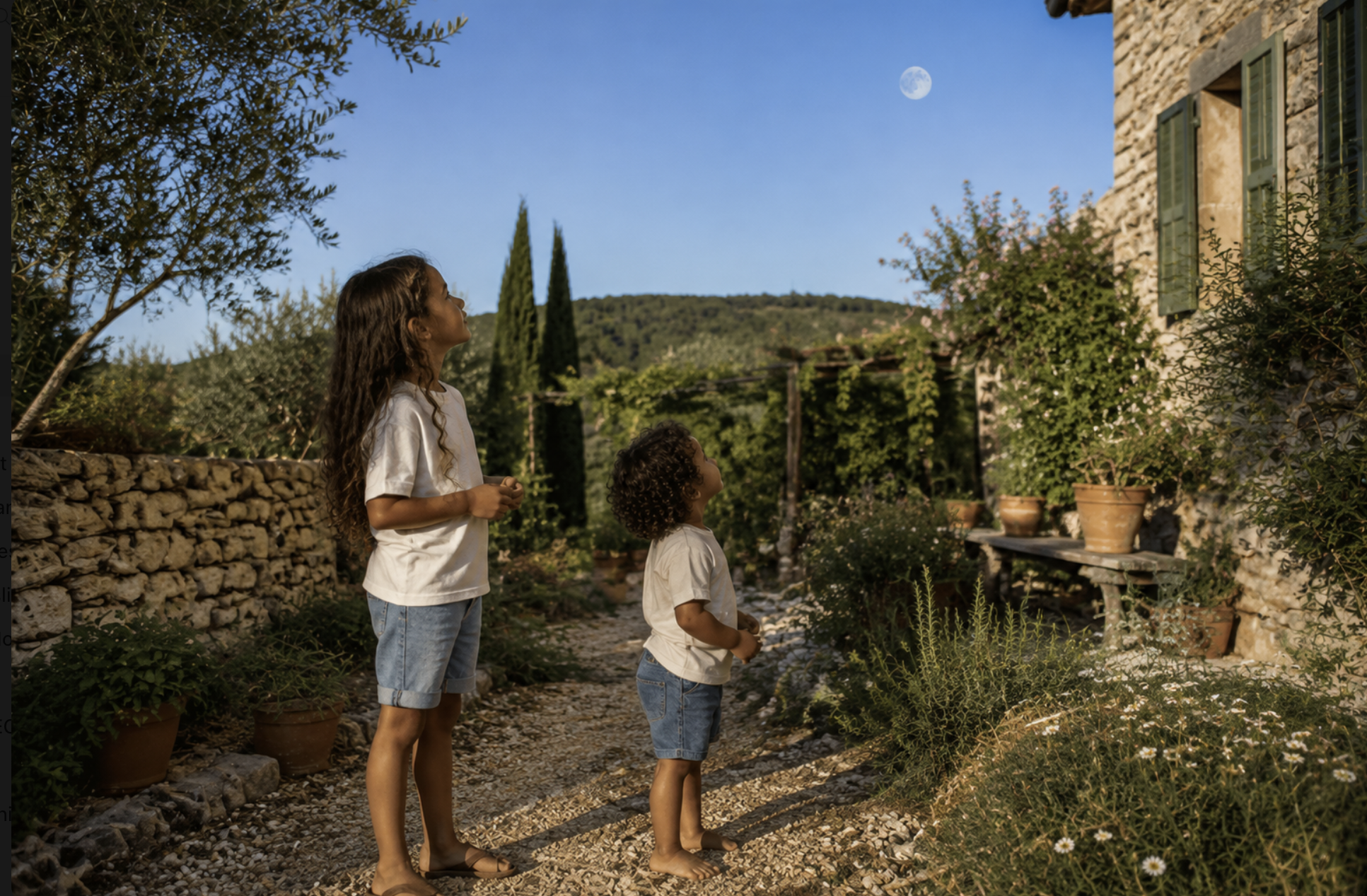
The moon is up in the daytime. Often.
Almost no child knows this, because almost nobody mentions it. We hand them a picture of a yellow crescent on a navy sky and that becomes the only place they ever look for it.
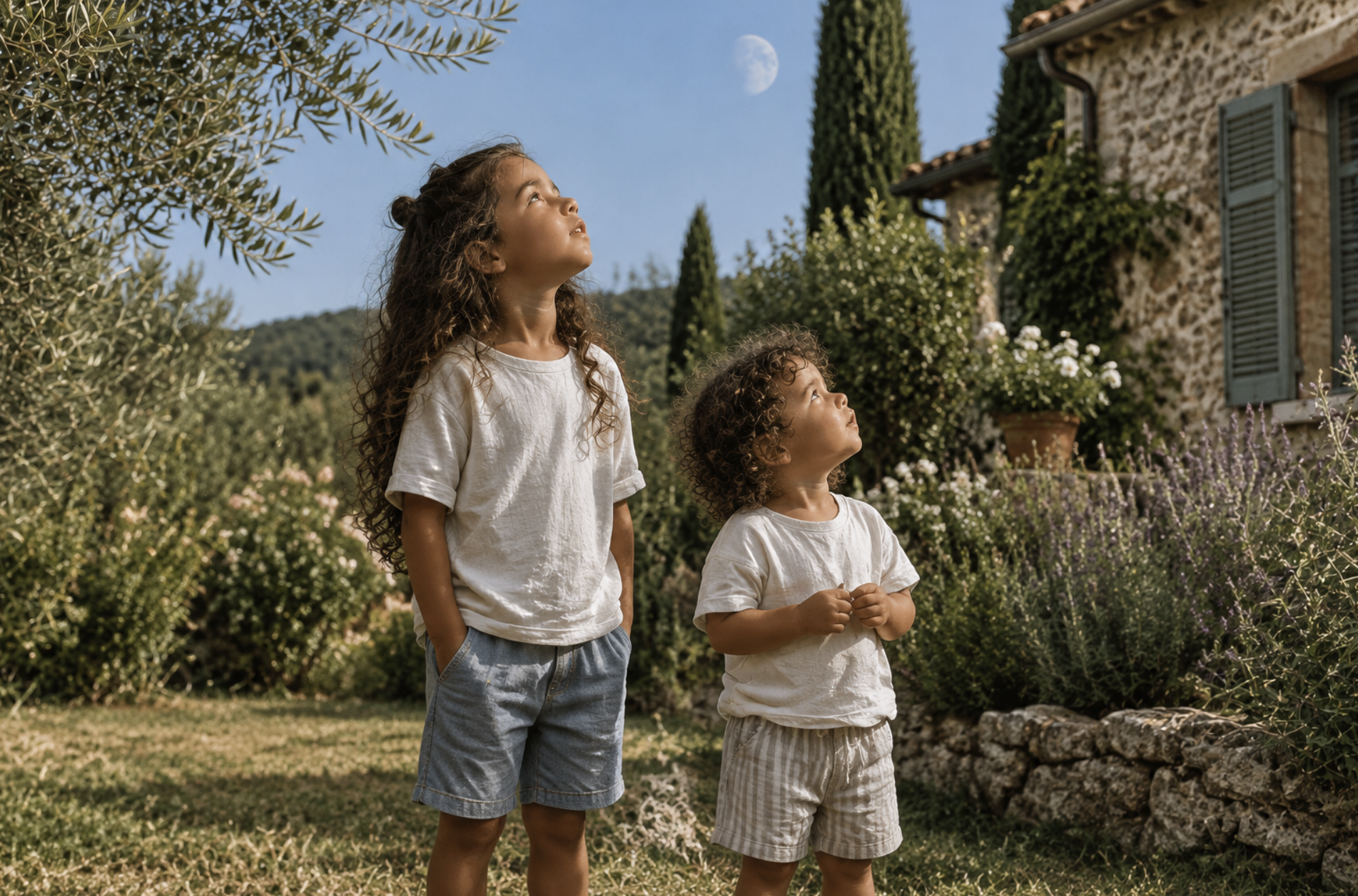
So say it out loud, once, and then say nothing else about it. The moon is up in the day about as often as it is up at night. Then let them be the one to find it — pale against blue, over a rooftop, at three in the afternoon.
That moment is worth more than a page of explanation. My son found his first daylight moon on the way back from the shops and told everybody we met for a week.
What Not to Say
Study to be quiet. — 1 Thessalonians 4:11, KJV
Do not teach the phases.
Not yet. Not while the strip is filling. It is the hardest part of this for a mother who knows the answer, and it is the part that makes the whole thing work.
Because at the end of the month, your child is going to look at thirty circles in their own handwriting and see it: growing, full, shrinking, gone, and beginning again. They will find the pattern themselves, in their own record, in their own hand.
Tell them in week one and you have given them a fact. Say nothing until week five and you have given them a discovery. It is the same information and it is not remotely the same thing.
When the Month Is Done
Sit down with the strip and ask three questions. What is the shape doing across the row? How many nights from full to full? What happened in the gaps you missed?
Then, and only then, tell them why. The moon makes no light of its own — what changes is how much of its sunlit half is turned toward us. Nothing about the moon changes at all. Only our view of it.
And one small thing, said carefully: a lunar eclipse is a completely different event. That is Earth's shadow falling across the moon, and it happens rarely. The monthly shapes are not shadows. Children muddle these two constantly, and one sentence at the right moment prevents years of confusion.
Start Tonight
Do not wait for the new moon. Do not wait for a clear week. Start with whatever is up there this evening, or whatever is up there tomorrow at lunchtime.
The pattern does not care where you begin.
We have made the thirty-night strip as a free printable — a row of circles, dates, and nothing else. Save the image below to print.
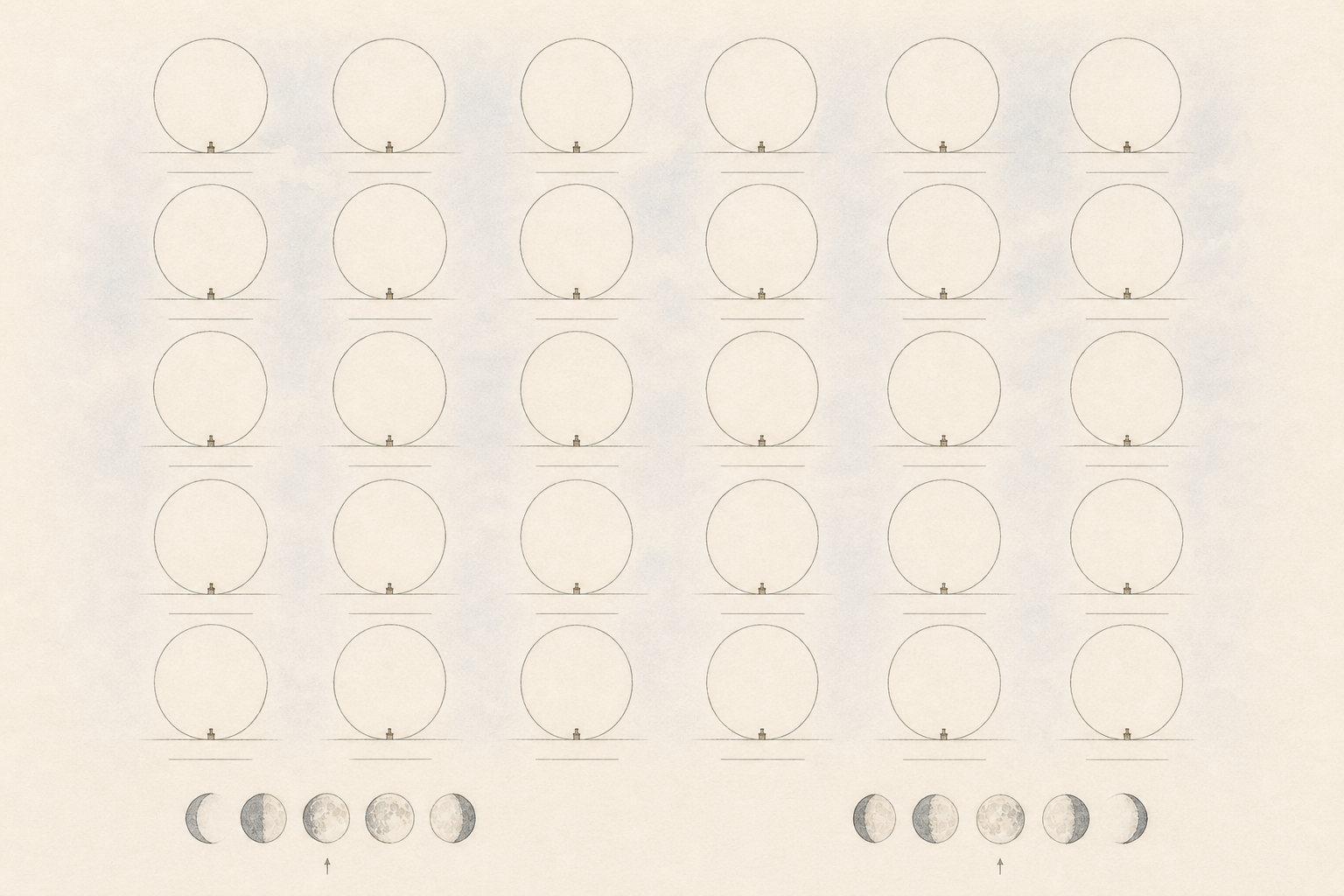
© 2026 Joanna Colomas
This is part of Above Our Heads nature study and is copyrighted
The moon strip is one of 18 movements in Above Our Heads, our sky study for ages 4 to 14.
In the study, the strip opens on the first day and is read back a month later.
The sky has been there the whole time
Your child has walked under it every day of their life and has probably never once been shown what to look at. Not because you failed to teach it — because nobody teaches it. We name clouds on a poster and move on.
Above Our Heads does the opposite. Your child chooses a standing place they can reach in under a minute, and a fixed point that does not move — a tree, a chimney, the edge of a roof. Everything in the sky is then measured against it. Clouds pass it. Birds cross it. The moon sits above it or below it.
From that one small decision, eighteen movements unfold.
What your child becomes
Not a student filling in blanks — a keeper of the sky.
- Reads a cloud by its shape and its base, and knows which two carry the rain
- Estimates sky cover in eighths, the way weather services actually record it
- Finds the wind without feeling it, by what it is doing to everything else
- Reads the signs before rain and writes them down before the first drop
- Names a bird by how it flies when they cannot see its colors
- Knows what a feather is built from, and why the parts hook together
- Watches a nest from far enough away that the parents keep coming back
- Tells weather from climate, and knows why one can be watched and the other cannot
- Tracks the moon for a full month and then reads their own record back
- Waits twenty minutes in the dark and watches a sky fill with stars that were there all along
And underneath all of it — patience. The sky does not perform on demand. It teaches a child to wait, and that is the deeper subject of the whole experience.
The month-long one
On the first day, your child opens a strip of thirty circles. Every time they happen to see the moon, day or night, they fill one in and date it.
Nothing is explained. Nothing is taught.
Four weeks later, Movement XVII opens — and it teaches your child nothing about the moon. It asks them what their own strip already knows. The pattern was in their handwriting the whole time.
Nothing else in this book takes that long, and nothing else lands like it does.
What is inside
The Experience
The interactive edition, opening in any browser on any device. Eighteen movements, a menu you can reach from any page without losing your place, and an evening mode that turns the whole book dark for early mornings and night skies. Every observation your child makes is kept. Their sky records, bird records and moon strip build across weeks and are read back to them later in the book.
Ten field cards
Pocket cards to carry outdoors. Reading a cloud. How much sky is covered. What the wind is doing. Before rain. Shapes that cross. Wings and what they do. Inside a feather. Beaks and feet. Nests from a distance. The moon this month. Plus the keeper's code and one blank, because ten was never going to be enough.
The printed Field Book
Three A4 files to print and write in, with the ruled lines already on the page. Print what you will use and leave the rest.
Eighty original paintings
Every plate in this book was painted by hand for it.
For the parent
A short, calm word for you. How to help without turning it into school, plain safety, and what to do on the tired day.
Faith at the foundation, not the edges
The works of the Lord are great, sought out of all them that have pleasure therein (Psalm 111:2). Scripture runs through this as its source, not its decoration. Your child learns to receive creation with gratitude before ever asking what could be done to it — that observation comes before intervention, stewardship before control, and that human wisdom has limits. All Scripture is King James Version.
Built for real family life
The weather decides, not the page order. Use the weather door: if it is windy, do the wind. If the moon is up, do the moon. The linear path is there for anyone who wants it and it is not the only way through.
Bad weather? An open window is a real observation post. So is a windowsill and ten minutes.
More than one child? Three depths — Early Years, Curious Years, Capable Years — run through every movement, so a four-year-old points at a cloud while a twelve-year-old times it and names the family. One sky, several depths, shared.
No printer? The Doorway stands alone. The printables wait.
City sky? Every movement works from a doorstep, a balcony or a window. The book never promises a wilderness sky, because most families will never stand under one.
Watched, never disturbed
The keeper's code comes before the first movement, and almost every line of it is something your child does not do. Nests are watched from a distance that lets the parents keep coming back. Nothing is touched — not nests, not eggs, not chicks. Recorded bird calls are never played outdoors. A feather is drawn where it lies. Nobody looks at the sun, at any time of day, through anything.
Every safety statement and every scientific claim in this book was checked against national weather services, ornithological bodies and space agencies before it was written.
Works anywhere in the world
Nothing here depends on your hemisphere, your latitude or your season. No planets are named, because which ones are up depends entirely on the date. No wind direction is called cold. The moon wording works north or south of the equator. Your child learns their sky, wherever they are standing.
The details
- Format: 1 interactive edition (any browser, any device) + 4 print-ready A4 files
- Length: 18 movements · 10 field cards · 80 original paintings · a 30-night moon strip
- Ages: 4–14, with three built-in depths
- Scripture: King James Version throughout
- Subject: Sky, weather, clouds, birds, feathers, nests, light, the moon, first stars
- Use: Homeschool, Charlotte Mason and nature-study families, Christian education, summer learning, family field days
- Delivery: Instant digital access. No account, no app, nothing to install.
One enormous sky, and one small person underneath it with their head tipped back.
You Might Enjoy

You do not need a forest, a garden, or a car. You need a window that opens and somewhere to stand — and a city gives your children things a field never will.