
Foraging the last heat: Wild Plants to Gather Before Autumn, and Why He Planted Them
By late summer, the sound of the cicadas fades just enough to notice the quietude beneath. Not silence — at least not yet — but a softening. The days are still hot, but the pine needles on the ground don’t burn quite like before. The basil stretches upward, flowering now, perfuming the air with that sharp, resinous sweetness that means it’s almost time to let go —
of the loud joy, the heat-soaked chaos, the hours that stretch past bedtime.
The garden is still giving. Figs swelling on the branch, rosemary thick with bees, mint curling into shadowed corners where the hose once ran. Tomatoes still warm to the touch by late afternoon, bursting at the skin if picked too late.
And just beyond the garden’s edge, where the soil is cracked and no one calls it theirs, the real secrets start to appear — things not planted but placed. Wild shapes, strong-scented and stubborn. Mugwort brushing your ankles with its silvery leaves, yarrow standing tall and open to the sky, berries hanging like punctuation at the end of tangled bramble. There’s a rhythm to it — not ours, but His. This is the part of the season He wrote in wild script, the part that doesn’t need tending to be good. Nature’s pharmacy arriving right on time, not forgotten, not late — simply faithful, like the One who made it.
What to Forage in Late Summer — and Why
These aren’t trendy “foraging” ingredients. These are age-old, God-given plants — the kind that don’t ask for watering or tending, but still arrive right when the body begins to shift. Bitterness, minerals, warmth, deep cleansing. Not for today’s pleasure, but for tomorrow’s endurance.
Because God is not seasonal — He is steady. And He planted these wild gifts to appear now, not by accident, but in preparation. To clear out. To build up. To steady.
Each one comes with a reason. And a use. All of them still within reach, if you know how to walk the edges and listen.
Mugwort
(Artemisia vulgaris)

Where to find: Roadsides, wild fields, disturbed edges, near streams
Use for: Liver support, hormone balancing, dreaming, digestive strength
Parts to use: Leaves and flowering tops — best harvested before or just as flowering begins. Roots can be used medicinally too, but are stronger and typically for more advanced use.
Caution: Not for use during pregnancy or while breastfeeding in large amounts. May cause sensitivity in those allergic to other Artemisia plants (like tarragon or ragweed)
Why He gave it now: Because bitterness heals. Because summer is sweet and too much sweetness needs something sharp to bring it back into balance. Our bodies hold more than food, and this plant knows how to help us release what we’ve carried.
Mugwort appears when the heat has settled deep — to stir what’s stagnant, to warm what’s cold, to steady what’s shifting inside.
How to use it:
- Dry the leaves and make a bedtime tea to encourage restful sleep and vivid dreams
- Infuse in oil and massage gently over the lower abdomen to soothe tension, bloating, support hormonal shifts and comfort womb.
- Burn as a smudge to clear heaviness from the home — not for spiritual cleansing (only God can do that), but to mark a shift in the air, to slow, to breathe.
Mugwort Dream Tea
– 1 tsp dried mugwort leaves
– 1 tsp dried lemon balm or chamomile
– Optional: 3–4 dried rose petals
Pour 200 ml boiled water. Cover and steep 7–10 minutes. Drink warm before bed to calm the body and invite rest.
Not recommended during pregnancy or for very young children.
Yarrow
(Achillea millefolium)
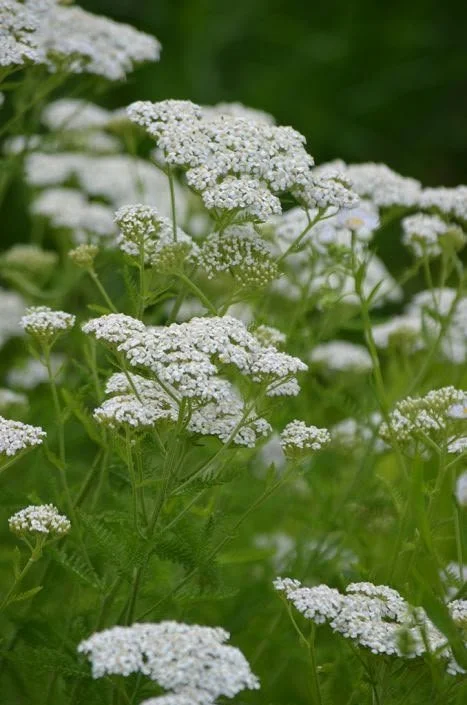
Where to find: Dry meadows, sunny roadsides, rocky hillsides, abandoned fields
Use for: Immune support, fever relief, wound healing, menstrual regulation
Parts to use: Leaves and flowering tops, fresh or dried. Harvest when flowers are fully open but not yet drying out. Roots can be used medicinally but are not typically for home use.
Caution: Avoid during pregnancy. May cause allergic reactions in those sensitive to ragweed or daisies. Use in moderation — not for long-term daily use.
Why He gave it now:
Because fevers will come. Because wounds — inside and out — need tending. Yarrow is Heaven’s little soldier plant: strong, faithful, ready. It closes, cools, protects, and steadies. The kind of remedy you want to know before you need it. And it arrives just in time — always.
How to use it:
- Dry the leaves and flowers for immune-boosting teas, especially when seasonal chills return
- Infuse in oil and use on cracked skin, minor wounds, or as a balm base
- Use fresh leaves as a poultice to stop bleeding or soothe bites when outdoors
Yarrow Cold & Fever Tea
– 1 tsp dried yarrow
– ½ tsp dried elderflower
– ½ tsp dried peppermint or lemon balm
Pour 250 ml boiled water. Cover, steep 8 minutes.
Strain and sweeten with raw honey.
Use at the first sign of fever, chills, or body aches. Not for daily use in healthy children — reserve for need.
Plantain
(Plantago major & Plantago lanceolata)
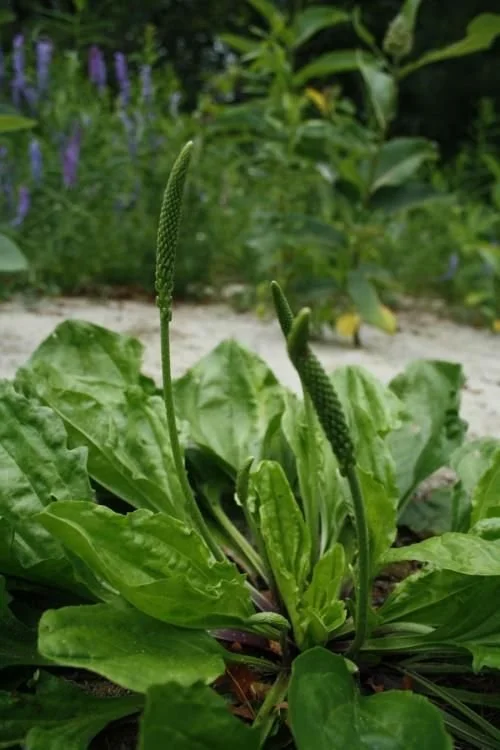
Where to find: Cracks in sidewalks, grassy paths, compacted soil, roadsides — anywhere the land is walked on and overlooked
Use for: Skin healing, drawing out infection or splinters, soothing coughs, calming the digestive tract
Parts to use: Leaves only — harvested fresh or dried. Young leaves are best for internal use; older ones for salves and poultices.
Caution: Very safe, including for children. Just ensure proper identification — look for broad or narrow leaves with distinct parallel veins and a string-like thread when torn.
Why He gave it now:
Because this is the time of cuts and bites and barefoot wanderings — and because sometimes healing grows low to the ground, where we’d least expect it. Plantain isn’t showy. It doesn’t bloom bright. But it’s one of the most faithful herbs we’ve been given — the kind that does exactly what it says it will do. Cooling, pulling, mending.
How to use it:
- Chew and apply fresh to stings, bites, splinters, or minor wounds as a quick-acting poultice
- Dry or infuse in oil for healing salves that soothe irritation, rash, or cracked skin
- Steep as a tea for sore throats, coughs, ulcers, or gut repair — best with a bit of mint for flavor
Simple Plantain Healing Salve
– 1 cup fresh plantain leaves, chopped
– 1 cup olive oil (cold-pressed)
– 30 g beeswax (or adjust to desired firmness)
Gently warm the leaves and oil in a double boiler for 1–2 hours on very low heat (or let infuse in sunlight for 2–3 days). Strain well. Return oil to heat and stir in beeswax until melted. Pour into small clean jars. Use on bug bites, scrapes, chapped skin, or dry heels.
Safe for all ages. For external use.
Elderberries
(Sambucus nigra)
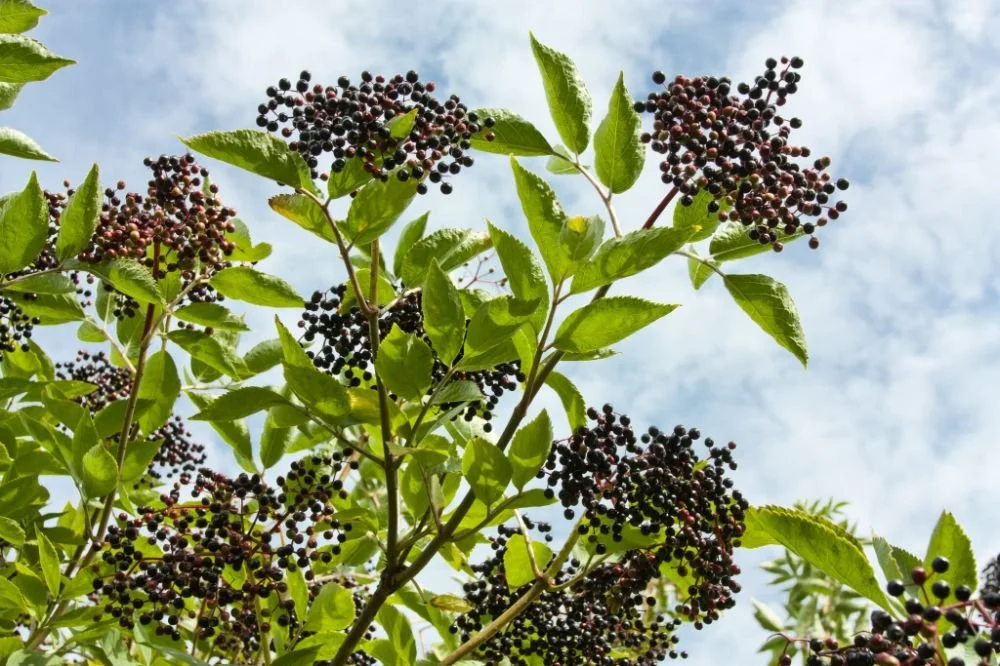
Where to find: Woodland edges, stream banks, old roadsides, abandoned orchards — often where the trees lean just enough to be noticed
Use for: Immune support, cold and flu prevention, antioxidant-rich nourishment
Parts to use: Fully ripe berries only (deep purple-black, never green or red)
Flowers can be used earlier in the season, but by late summer, it’s the berries we gather.
Caution: Raw berries, stems, and leaves are toxic. Always cook before using.
Only use black elder (Sambucus nigra), not red elder (Sambucus racemosa), which is toxic even when cooked.
Why He gave it now:
Because the cold is coming — and He always prepares ahead of the season. These berries grow heavy in the heat but are made for the chill. A holy contradiction. Elder strengthens what will be tested: the immune system, the breath, the body’s ability to fight. It doesn’t shout. It sustains.
How to use it:
- Simmer into a syrup to support immunity for children and adults alike
- Freeze the cooked berries in small portions for winter use
- Cook into compotes or add to crumbles with warming spices like cinnamon and clove
Simple Elderberry Syrup
– 1 cup fresh elderberries (or ½ cup dried)
– 2 cups water
– 1 tsp cinnamon
– 3–4 whole cloves
– 1–2 slices fresh ginger (optional)
– ½ cup raw honey (add only after cooling)
Simmer berries, water, and spices uncovered for 35–40 minutes. Mash gently and strain. Cool until just warm, then stir in honey. Store in the fridge.
Take 1 tsp per day for children, 1 tbsp for adults during cold season or at the first sign of illness.
Wild Blackberries
(Rubus fruticosus)
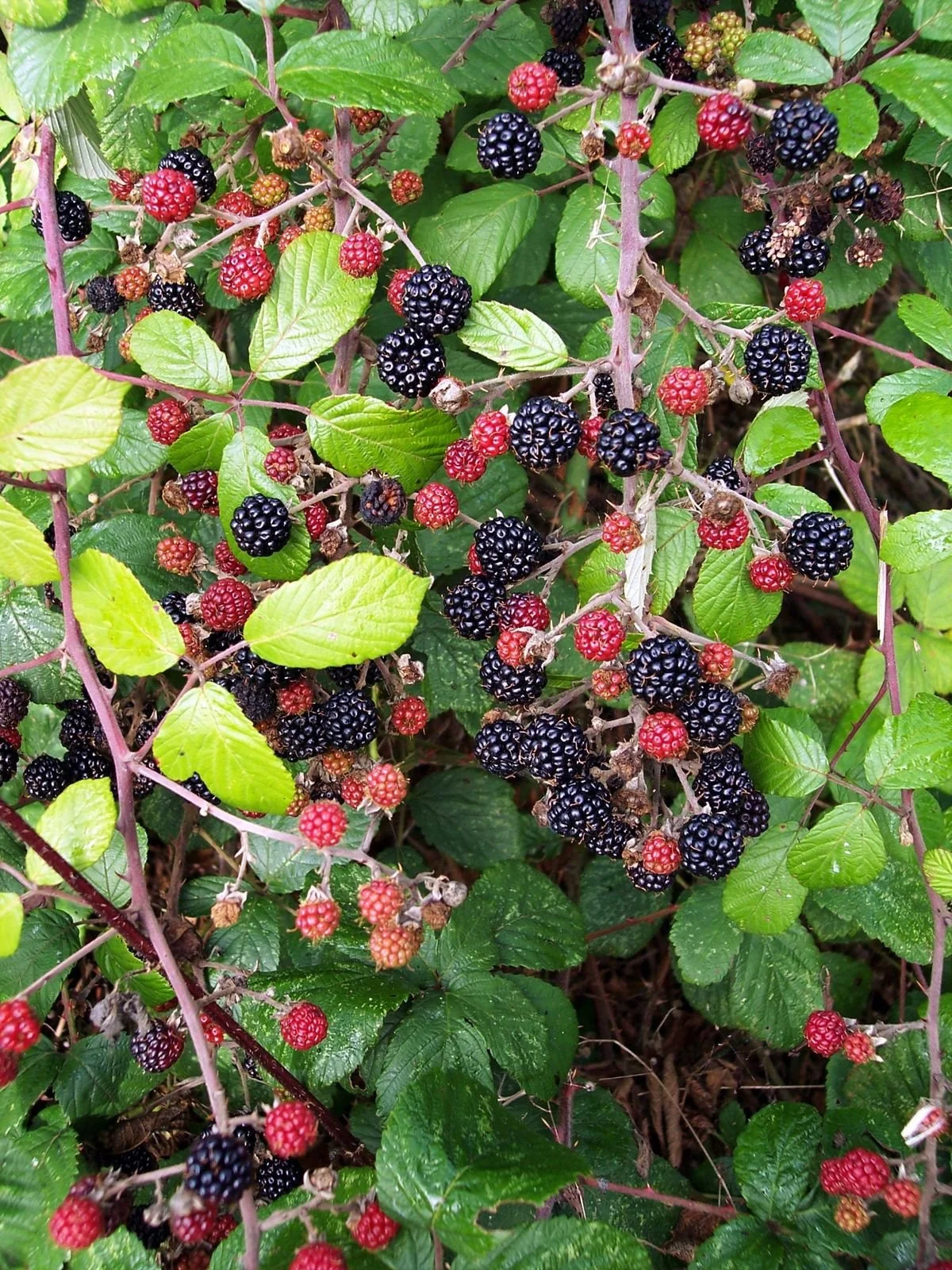
Where to find: Hedgerows, woodland paths, field edges, tangled bramble — often where no one tends, but the sun still reaches
Use for: Iron, vitamin C, antioxidants, gut support, joy
Parts to use: Berries — fully ripe, deep black with a slight gloss, easily releasing from the stem. Young leaves can also be dried earlier in the season for astringent teas, but by now, it’s the fruit we gather.
Caution: Avoid areas too close to roadsides or polluted soil. Watch for thorns and, always, for wasps. Berries should be soft but not collapsing.
Why He gave it now:
Because not all medicine is bitter. Sometimes it’s sweet and sun-warmed and hidden behind thorns — and still He gave it. Blackberries nourish without drama. They restore. Full of iron, memory, and a flavor you only get if you pick them yourself. They remind us that God didn’t just plan for survival — He made space for delight, even in preparation.
How to use it:
- Eat fresh off the vine — the best way to catch their sun-drenched complexity
- Simmer gently into a compote or syrup for winter storage
- Freeze flat on trays, then store in bags for smoothies, porridges, or simple cakes
Late Summer Blackberry Compote
– 1 cup fresh wild blackberries
– 1 tbsp maple syrup (or honey, to taste)
– Juice of ½ lemon
Optional: a pinch of cinnamon or cardamom
Warm gently in a small saucepan over low heat until berries release their juices. Stir occasionally, but don’t overcook.
Serve over porridge, yogurt, pancakes — or cool completely and spoon over a simple almond cake.
Store leftovers in the fridge. Keeps 4–5 days.
Nettle
(Urtica dioica)

Where to find: Damp, shaded areas — along riverbanks, under trees, near stone walls and field edges
Use for: Iron, minerals, blood building, hormone and adrenal support, postpartum nourishment
Parts to use: Leaves only — harvest while still vibrant green, before flowering. Use gloves and scissors. Dry in bunches or dehydrate gently. Stems can be used for fiber, but not for tea. Roots are medicinal but reserved for experienced use.
Caution: Do not harvest after flowering (can irritate kidneys). Always wear gloves to avoid stings when fresh (altough lot of good comes from nettle stings). Safe for most people, including breastfeeding mothers, but consult a trusted herbal source if unsure.
Why He gave it now:
Because after the season of fruit and fun comes the need for rebuilding. Because blood needs feeding. Nettle is not soft, not romantic — but it is holy in its strength. Packed with iron, calcium, magnesium, and chlorophyll, it steadies what’s been scattered. For women, for mothers, for the weary.
How to use it:
- Dry the leaves and steep as a daily mineral-rich tea
- Infuse in vinegar to extract calcium and iron — use as a tonic or in dressings
- Cook like spinach in soups, stews, or with garlic and olive oil once blanched
Nettle Mineral Tea
– 1 tbsp dried nettle
– 1 tsp dried raspberry leaf (optional, for women’s support)
– 1 tsp lemon balm or peppermint
Pour 300 ml just-boiled water over herbs. Cover and steep 10–15 minutes.
Drink warm or cool, with a slice of orange or splash of apple cider vinegar if desired.
Deeply nourishing for postpartum, menstruating women, or anyone rebuilding strength.
Wild Fennel
(Foeniculum vulgare)
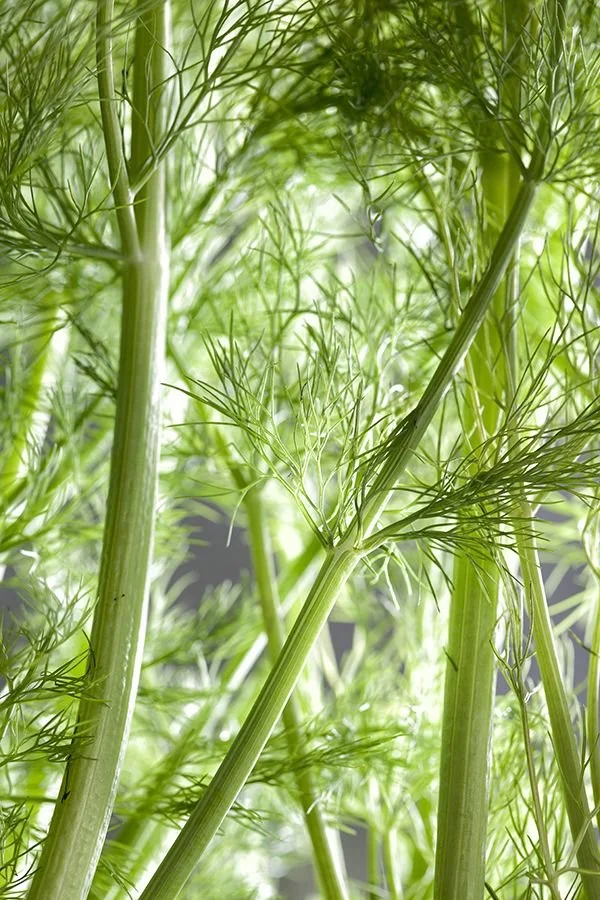
Where to find: Coastal paths, rocky hills, wild fields — often standing tall and feathery with yellow umbrella-shaped flowers
Use for: Digestion, bloating, calming colic, balancing hormones, sweet flavor
Parts to use: Seeds, fronds, and tender stalks. Seeds are best gathered once fully dry and brown on the plant. Fronds can be used fresh or dried.
Caution: Generally very safe, in high doses may act as a mild estrogenic herb — avoid large internal use during pregnancy unless guided.
Why He gave it now:
Because after fullness, we need ease. Fennel is the herb of exhale — soothing to the gut, fragrant on the fingers, sweet enough to taste like comfort. God made it grow where the land is dry, where little else thrives — and still it softens everything it touches.
How to use it:
- Chew the seeds after meals to aid digestion
- Steep into tea to calm bloating or ease a restless child’s belly
- Chop fronds into salads, sauces, or soups for a sweet anise flavor
Fennel Seed Digestive Tea
– 1 tsp lightly crushed fennel seeds
– ½ tsp dried chamomile or lemon balm
– Optional: slice of fresh ginger
Steep in boiled water for 8–10 minutes. Strain and sip slowly after meals or before bed.
Safe for children in small amounts. Can be given to babies via mother’s milk or cooled teaspoon.
Dandelion Root
(Taraxacum officinale)

Where to find: Fields, lawns, disturbed soil — especially where the land has been broken or left alone
Use for: Liver support, digestion, hormone balance, skin health, prebiotic support
Parts to use: Root — harvest in late summer to early fall, when energy has returned underground. Wash, chop, and dry or roast.
Caution: Safe for most people, but not recommended for those with gallbladder obstruction. Ensure proper ID — true dandelions have single yellow flowers and hollow stems.
Why He gave it now:
Because sometimes what heals is beneath the surface. Dandelion root is earthy, bitter, and honest — made to restore the liver, clear the skin, and ready the body for slower rhythms. While the world tries to kill it off, God keeps letting it grow — because He knows we still need it.
How to use it:
- Dry and steep as a tea or decoction
- Roast and grind for a coffee alternative
- Simmer in soups or healing broths for a subtle bitterness and deep nourishment
Dandelion Root “Coffee” (Roasted Herbal Brew)
– 2 tbsp dried dandelion root
– 1 tsp chicory root (optional)
– Cinnamon stick (optional)
Roast chopped roots in the oven at 175°C (350°F) for 10–15 min until fragrant and golden. Simmer 1 tbsp per cup of water for 10–15 min. Strain and enjoy with a splash of coconut milk or raw honey.
Supports liver, digestion, and energy without caffeine.
Pine Needles
(Pinus spp. — Maritime pine, Scots pine, etc.)
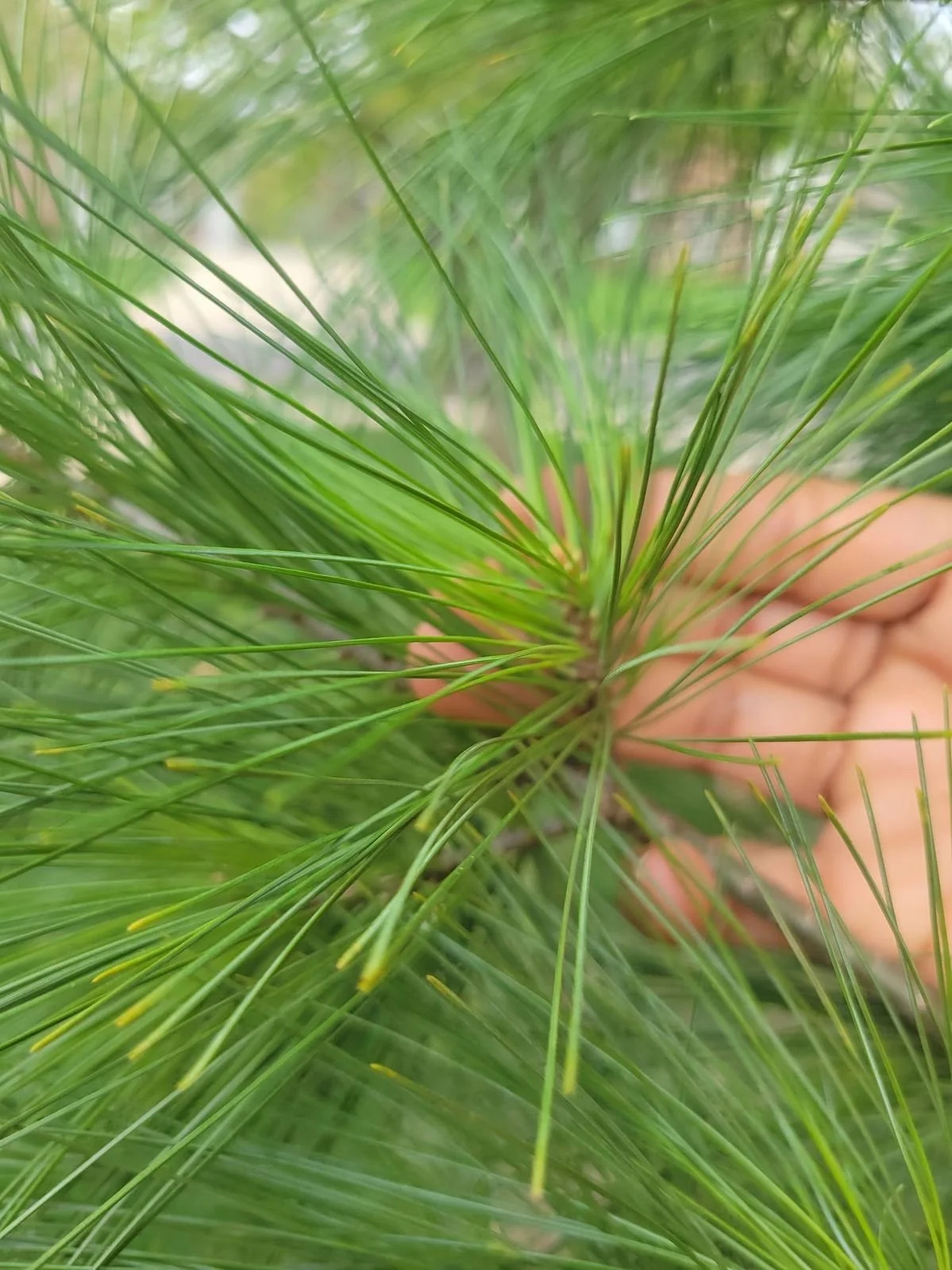
Where to find: Evergreen forests, hillsides, along mountain paths or rocky coastal woodlands — look for long, vibrant green needles, not dry or browning ones
Use for: Vitamin C, respiratory support, immune strengthening, gentle detox
Parts to use: Young green needles only (not fallen ones). Choose soft, pliable tips from healthy trees.
Caution: Avoid if pregnant. Do not use from yew, Norfolk Island pine, or other non-edible conifers — some are toxic. Stick to true pines (Pinus species). Always confirm with a proper guide or herbalist if unsure.
Why He gave it now:
Because the lungs are the first to struggle when the air changes. Because colds and coughs will come. And so He placed citrus-scented needles on tall trees — full of vitamin C and clarity — just before the fog. Pine is sharp, clean, invigorating. A breath of strength when breath begins to falter.
How to use it:
- Chop fresh needles and steep for tea — warm, lemony, and clearing
- Infuse in honey for a winter cough remedy
- Add to baths for respiratory and muscle support
Pine Needle Honey
– ½ cup chopped fresh pine needles (washed and dried)
– 1 cup raw honey
Layer needles in a clean dry jar and pour over honey. Stir gently to release bubbles. Seal and infuse 2–3 weeks in a cool spot. Stir occasionally.
Strain if desired, or leave needles in.
Take a spoonful at the first sign of a cough or sore throat, or stir into warm water for a pine tonic.
The wild doesn’t rush, and it doesn’t forget.
God looks after us — in every way we often miss — but He keeps on giving.
Everything we need for what’s coming has already been offered: tucked into hedgerows, rooted in dust, ripening beneath the hum of August.
We were never meant to enter the colder seasons empty.
He made sure of it.
Related Reads You’ll Love




Homemaking changes when your children are with you all day. This seven-day guide is a realistic guide for mothers who homeschool or stay home full-time — simple resets, deeper weekly tasks, and a Sabbath anchored in rest and gratitude. A way to care for the home without losing yourself or the peace God intends for your family.