
The Best Games Leave Nothing Behind Except Memories
© 2026 Joanna Colomas Magazine
Childhood has always known how to play, We are the ones who forgot.
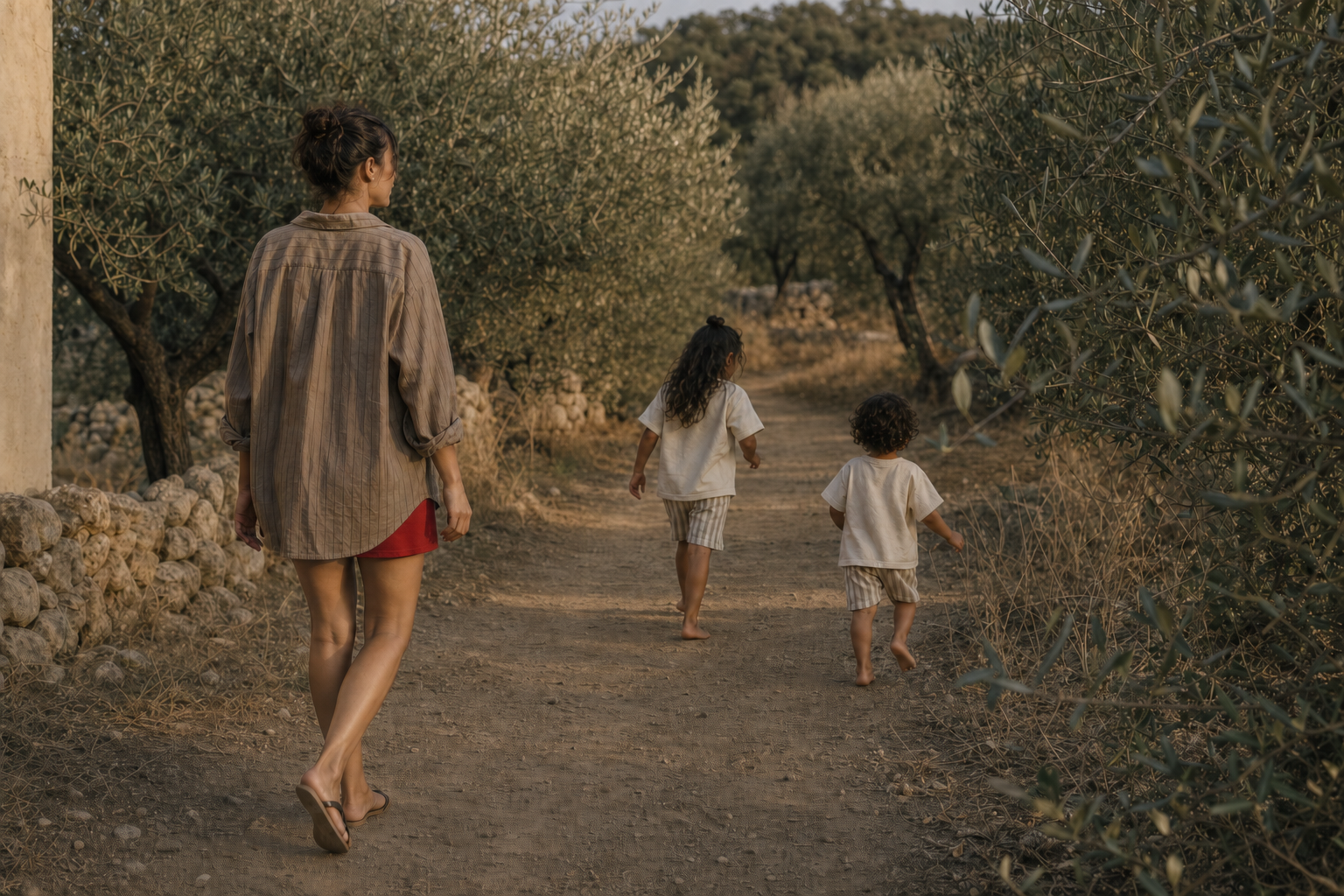
If you let it, there is a moment that happens every summer afternoon: a child bends down to pick up a stick.
To us, it is nothing more than a fallen branch, dry from the heat and lying where yesterday's wind left it. To him, it is the beginning of an expedition.
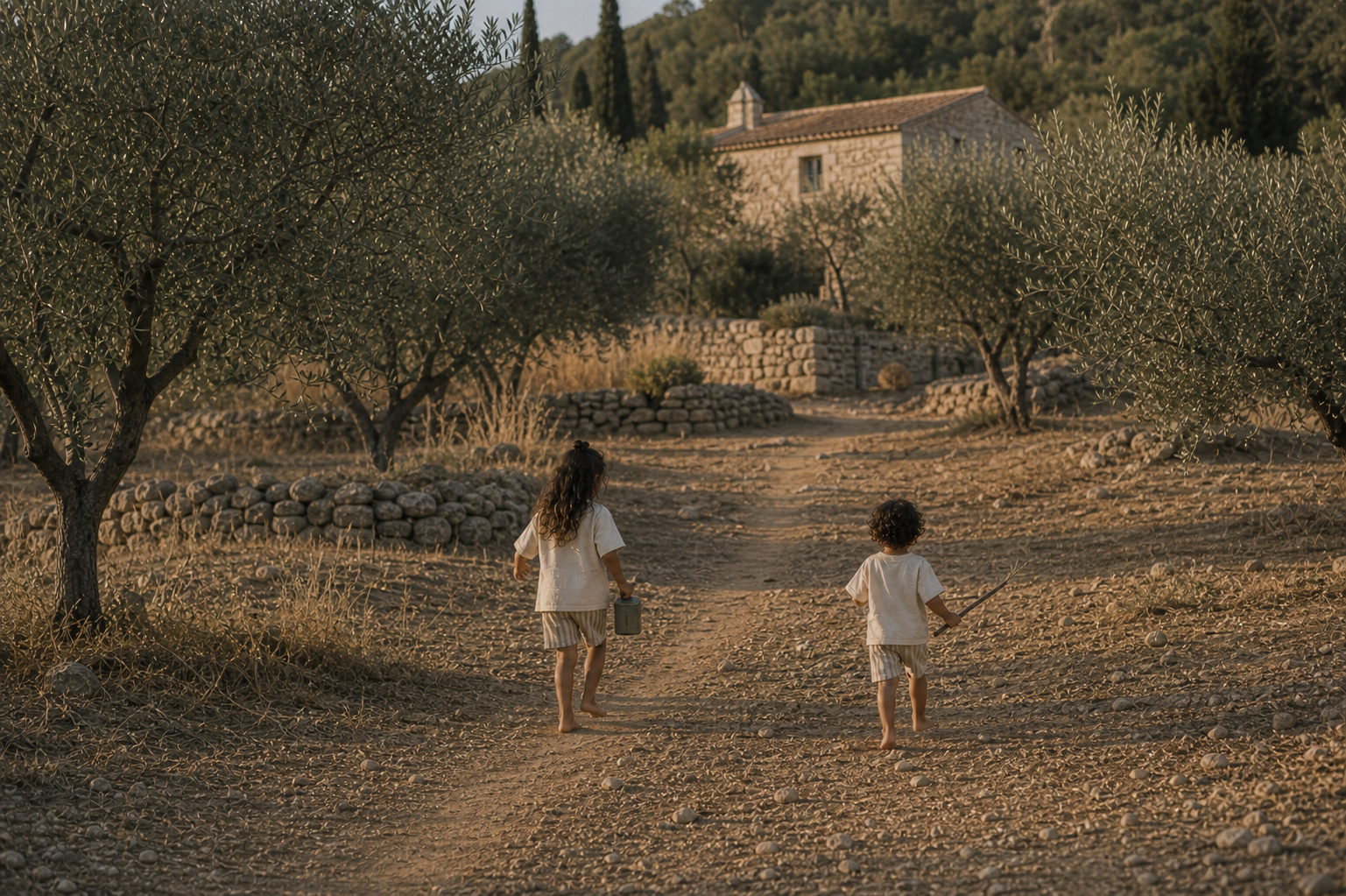
Within minutes, that same stick has become a fishing rod, a shepherd's staff, the mast of a ship, the flagpole of a hidden kingdom and, before the day is over, a walking stick carried proudly across fields. Before long, it is sweeping through waist-high grass like a farmer's scythe, opening trails to adventures only its owner understands.
Nothing about it was expensive. It didn't need charging and it didn't arrive in a cardboard box; yet somewhere between breakfast and bedtime, an ordinary piece of God's creation became the centre of an entire world.
© 2026 Joanna Colomas Magazine
Children have always possessed this remarkable gift.
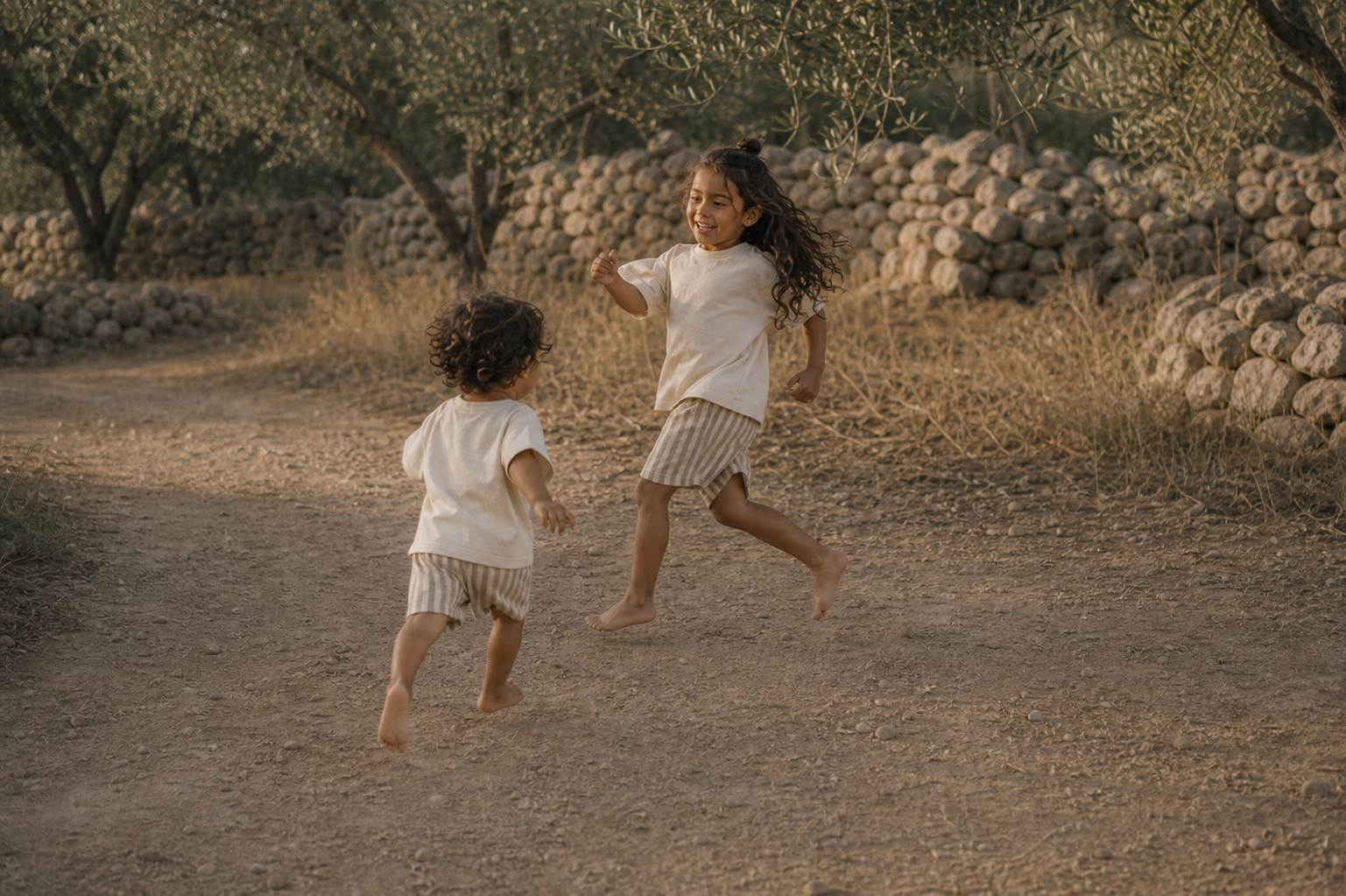
Give them a stream, and they will build a fleet. Give them a tree, and they will build a kingdom. Give them an empty field, and they will discover adventures adults could never have imagined.
It has always been this way. Yet somewhere along the road, a generation stopped believing it and stopped trusting childhood itself. From there, we traded wonder for entertainment, freedom for schedules, and childhood became something to organize rather than something children were simply living.
We began to think childhood needed more. More activities, more entertainment, more planning, more toys, more structure, more things to keep little hands busy.
Yes, entire industries have been built around the idea that children are forever waiting for the next activity we prepare for them, yet if we watch them carefully — really watch them — we begin to notice something surprising:
Left with enough time, enough freedom and enough trust, children rarely ask, "What are we doing next?"
They invent what comes next.
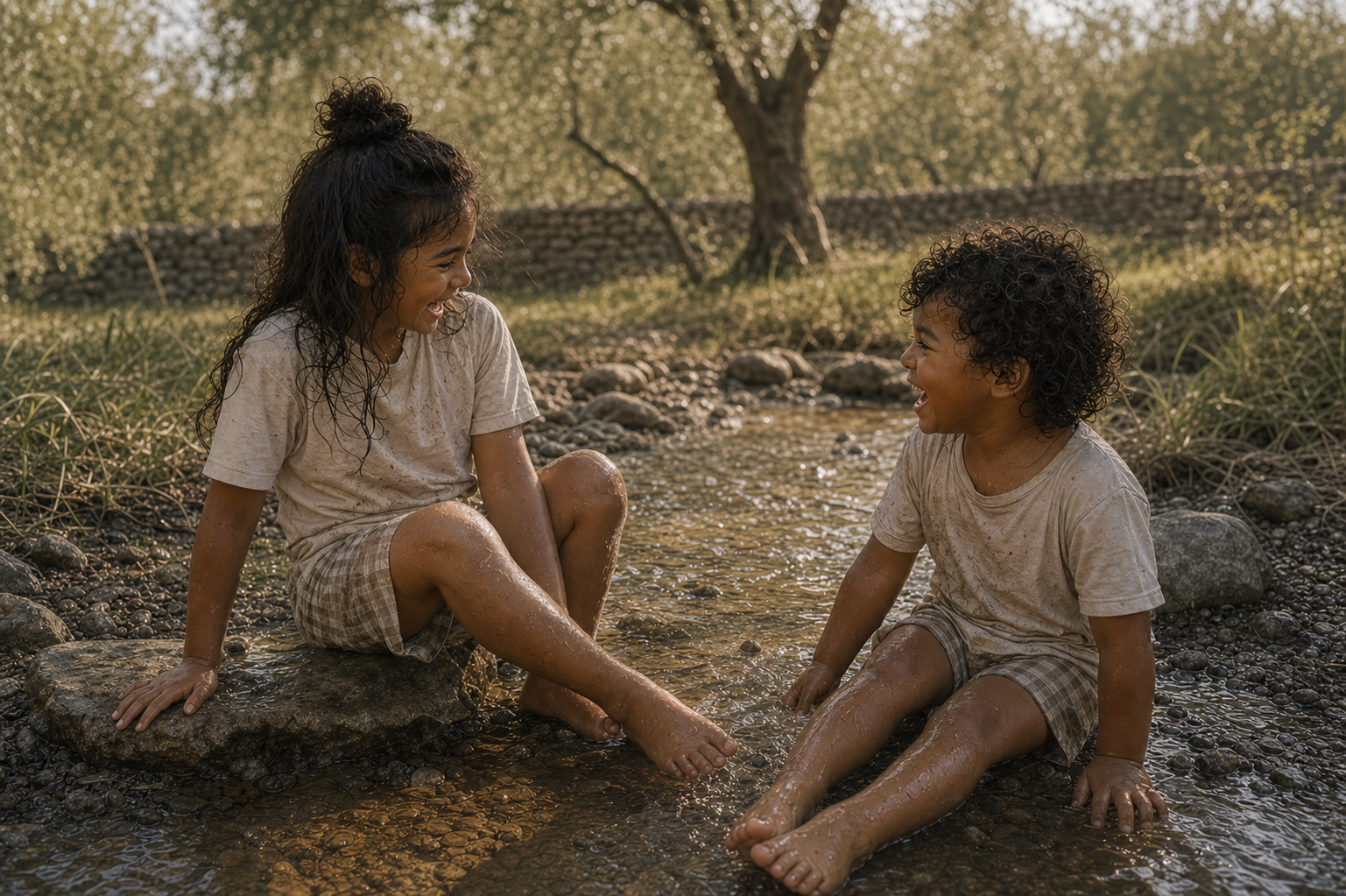
The games that shape childhood have never needed instruction manuals. They begin with a pocket full of smooth stones, a feather tucked into a pocket, muddy feet beside a stream, an older brother calling, "Come and see this," or a question as old as childhood itself:
"What do you think would happen if...?"
Maybe that is why the memories that stay with us are so rarely the expensive ones. We remember forts that no longer stand, tree branches climbed a hundred times, maps drawn into dusty ground before the evening draft carried them away.
The afternoon someone insisted they had discovered buried treasure, only to reveal an unusual snail shell and a curious-shaped stone, a bark boat racing downstream while two children ran laughing along the bank to see which bend it would reach first.
None of these moments asked for perfection. They asked only for childhood.
And that is what so many families are longing for today. Not a fuller calendar, subscription, nor another collection of activities to complete before summer ends. Something far simpler.
A childhood where the days were filled with sunshine, scraped knees, faithful dogs, muddy footprints, secret maps, long afternoons spent swimming, trees worth climbing, animals worth caring for, family life woven into every ordinary day, and brothers and sisters becoming each other's closest companions through adventures they would one day tell their own children about. A childhood shaped by the endless invitation to know, love and steward the world the Lord created.
"The earth is the Lord's, and the fulness thereof; the world, and they that dwell therein." — Psalm 24:1
Because the greatest games leave nothing behind except memories, those are the ones most worth passing on.
More Than Just Games
© 2026 Joanna Colomas Magazine
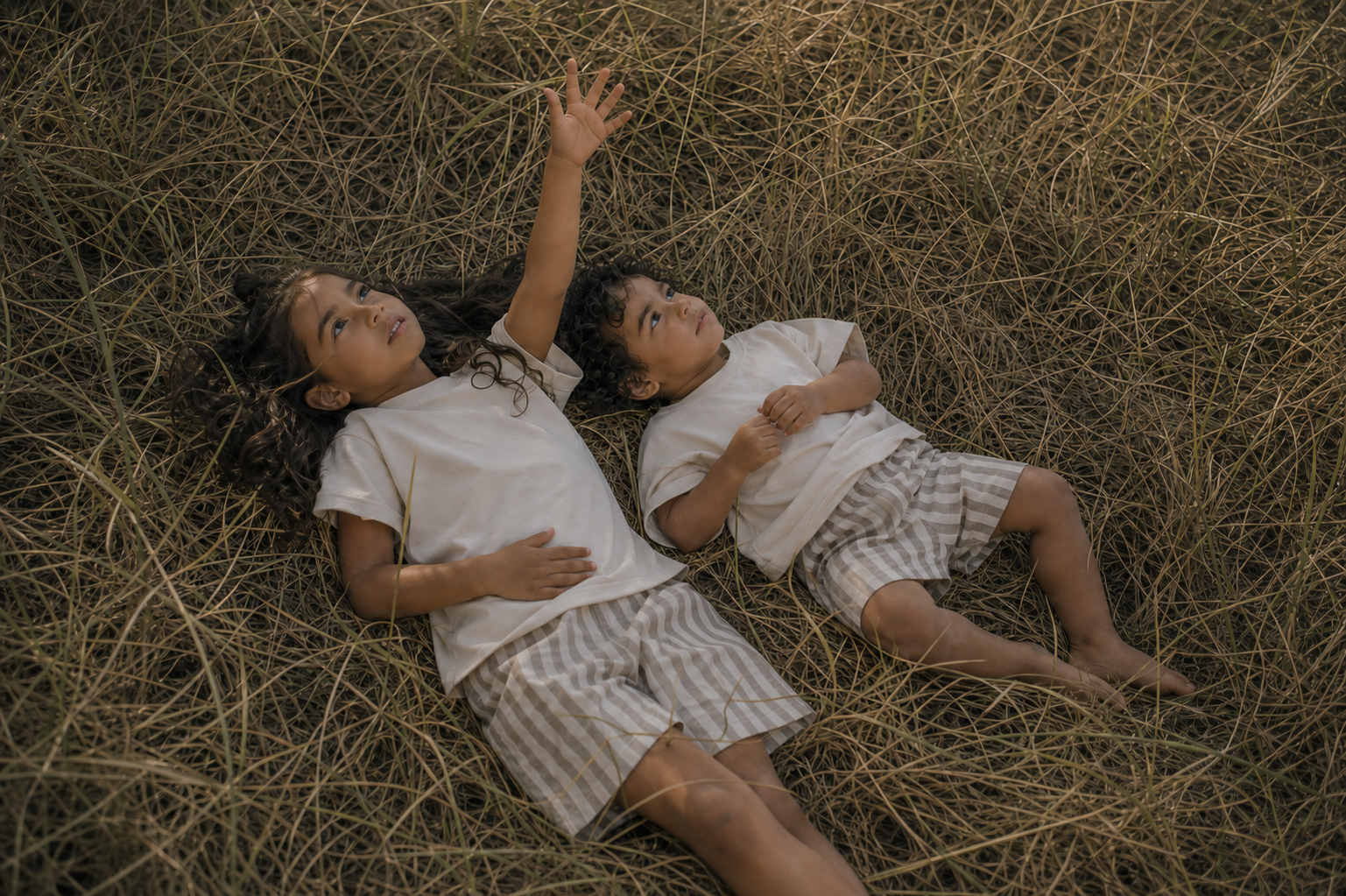
To an adult, it may look like an ordinary afternoon spent hopping across a stream on fallen rocks and weathered logs, chasing imaginary lions through tall summer grass, or standing before Goliath with nothing but a sling, five smooth stones and an unshakeable belief they will win. Children, however, are rarely just passing the time.
They are practicing.
Long before they understand words like courage, responsibility or stewardship, they begin living them. The older sibling instinctively slows his pace so little feet can keep up. A fallen branch becomes the beam that keeps a shelter standing. A forgotten lamb suddenly needs rescuing. Chickens must be fed before the adventure can continue. The earth must be saved from a meteorite. Every game asks children to solve problems, make decisions, care for something beyond themselves and work together.
None of it feels like a lesson, and that is precisely why it lasts.
Childhood has always been one of God's first classrooms — not because children spend it memorizing facts, but because they spend it living them. They learn patience while waiting for a fish that never bites. They learn perseverance when the fort collapses for the third time in ten minutes. They learn discernment deciding which branch is strong enough to climb and which is not. They learn compassion carrying water to thirsty animals before thinking of themselves.
We often imagine that character is built through extraordinary moments. More often, it is shaped through ordinary afternoons repeated hundreds of times.
Throughout Scripture, the Lord teaches His people through vineyards, shepherds, seeds, fishing nets, storms, harvests and gardens. Creation has always been more than a backdrop. It is where wisdom is so often learned.
It should not surprise us, then, that children discover so much of who they are while exploring the world He made.
"The works of the Lord are great, sought out of all them that have pleasure therein." — Psalm 111:2
The Games We Forgot to Pass On
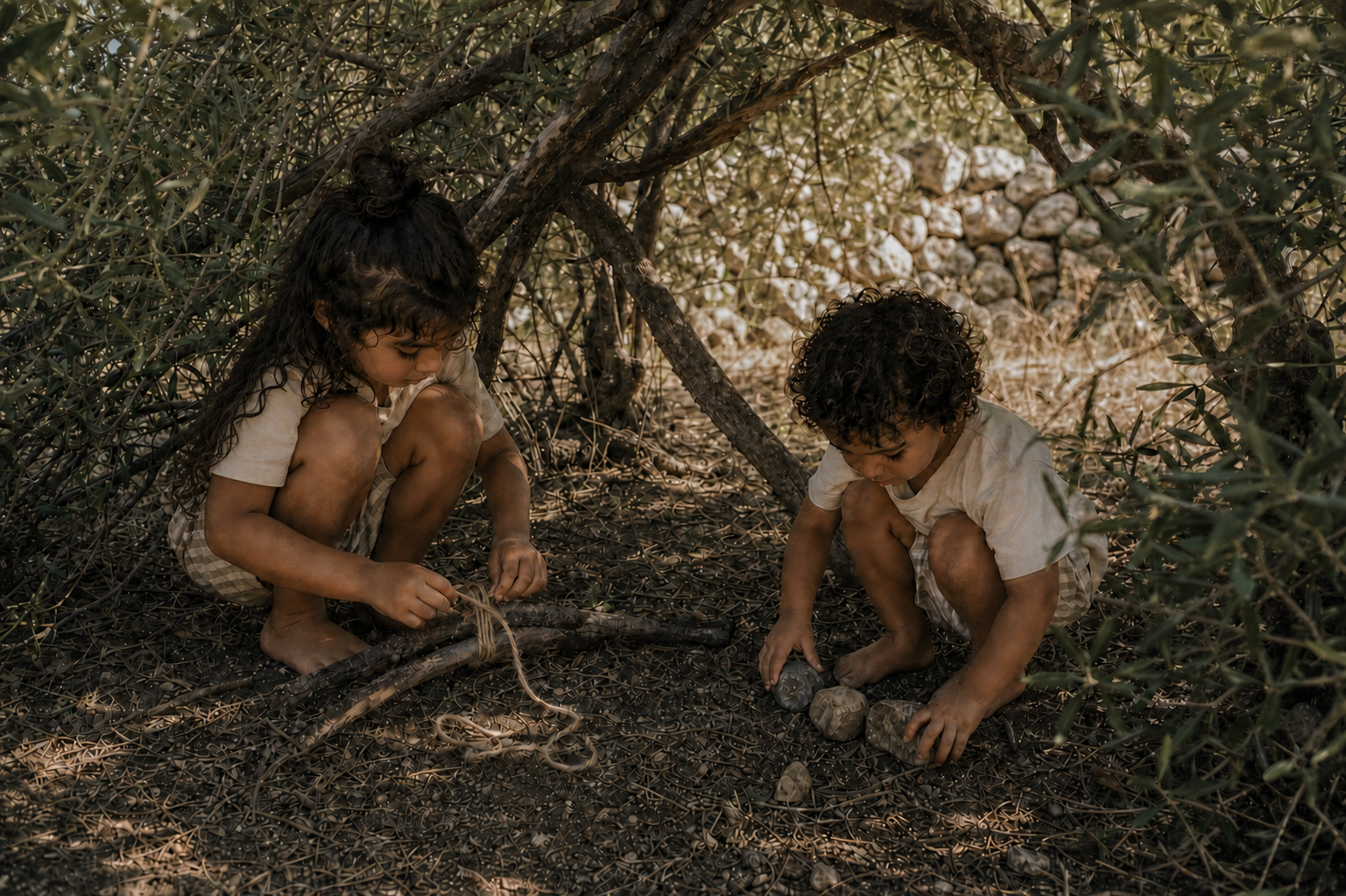
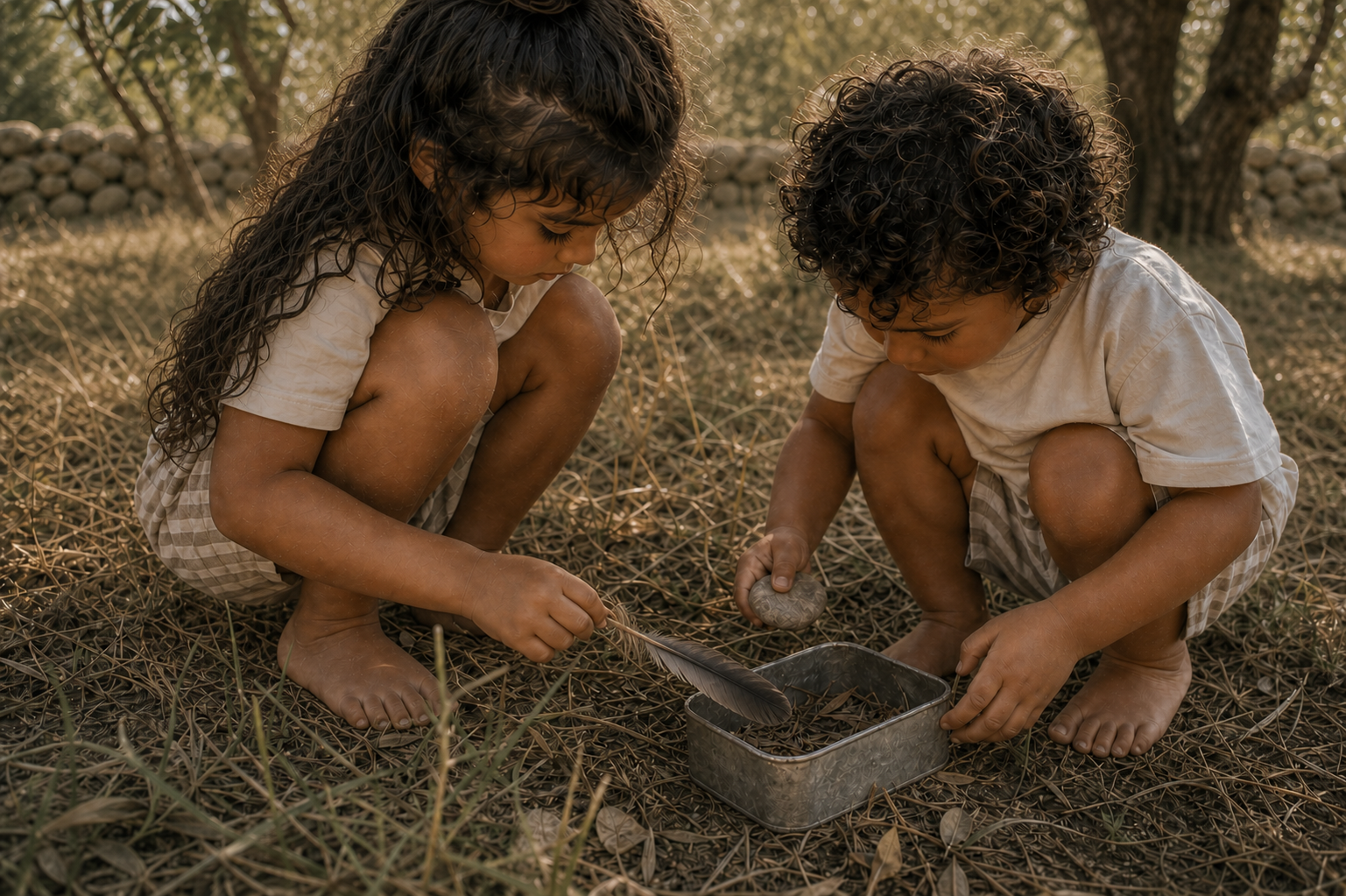
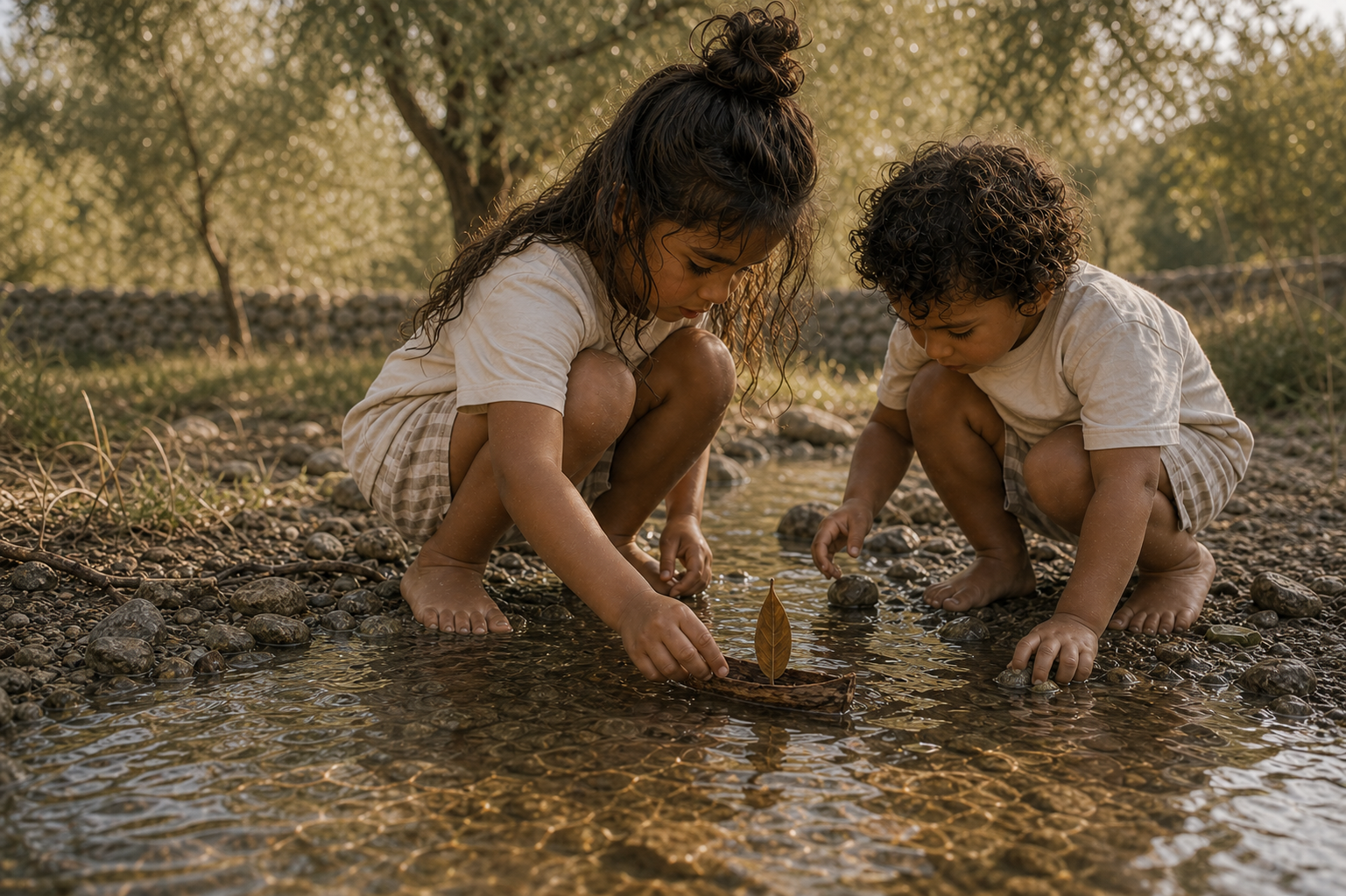
Every generation passes something to the next: a family recipe, a hymn sung to our children, a prayer before bed, the way to braid garlic for winter, where the sweetest blackberries grow each July, why we always stop to watch a sunset, or how Great-Grandpa taught us to read the wind and smell the rain long before the first clouds gathered.
Childhood is no different. For centuries, children inherited games without noticing. Nobody organized them, nobody wrote instructions, they simply followed older brothers, older sisters, cousins and neighbors until what had once been unfamiliar became second nature.
A younger child learned to skim stones because someone older already could. He learned to whistle through a blade of grass because he had watched his dad done a hundred times before.
She learned where blackberries grew, which trees were easiest to climb and how to cross the stream without getting wet because another child had already discovered the safest way.
These were not lessons, they were traditions, and many disappeared so quietly we scarcely noticed they were gone.
Not because children changed. Children are still born with the same curiosity, the same imagination and the same desire to explore the world around them.
What changed was the culture surrounding childhood. Neighborhoods grew quieter, afternoons became busier, free hours filled with organized activities, homework, lessons, appointments and screens.
Some traditions were forgotten simply because there was no one left to pass them on, and others disappeared because many of us were never taught them ourselves. That is why so many parents feel an unexpected longing when they watch children disappear into the woods with nothing more than an over-used-barely-holding-on homemade slingshot and an idea.
It reminds us of something we cannot put our finger on. Not a particular game, no. A particular kind of childhood.
One where imagination was trusted, responsibility came naturally and adventure waited just beyond the back door.
"One generation shall praise thy works to another, and shall declare thy mighty acts." — Psalm 145:4
WHAT EACH GAME WAS ACTUALLY TEACHING
© 2026 Joanna Colomas Magazine
None of the games below need a rulebook, and none of them are foreign to any child who has ever had a stick, a stream, or a stretch of unclaimed grass. What's easy to miss, watching from a kitchen window, is what each one was actually building. Sorted not by name but by what they teach, here is some of what a summer of real play still has to offer.
GAMES THAT TEACH COURAGE
Courage in a child rarely announces itself. It looks, instead, like small decisions made alone, tested against a body that isn't sure yet what it can do.
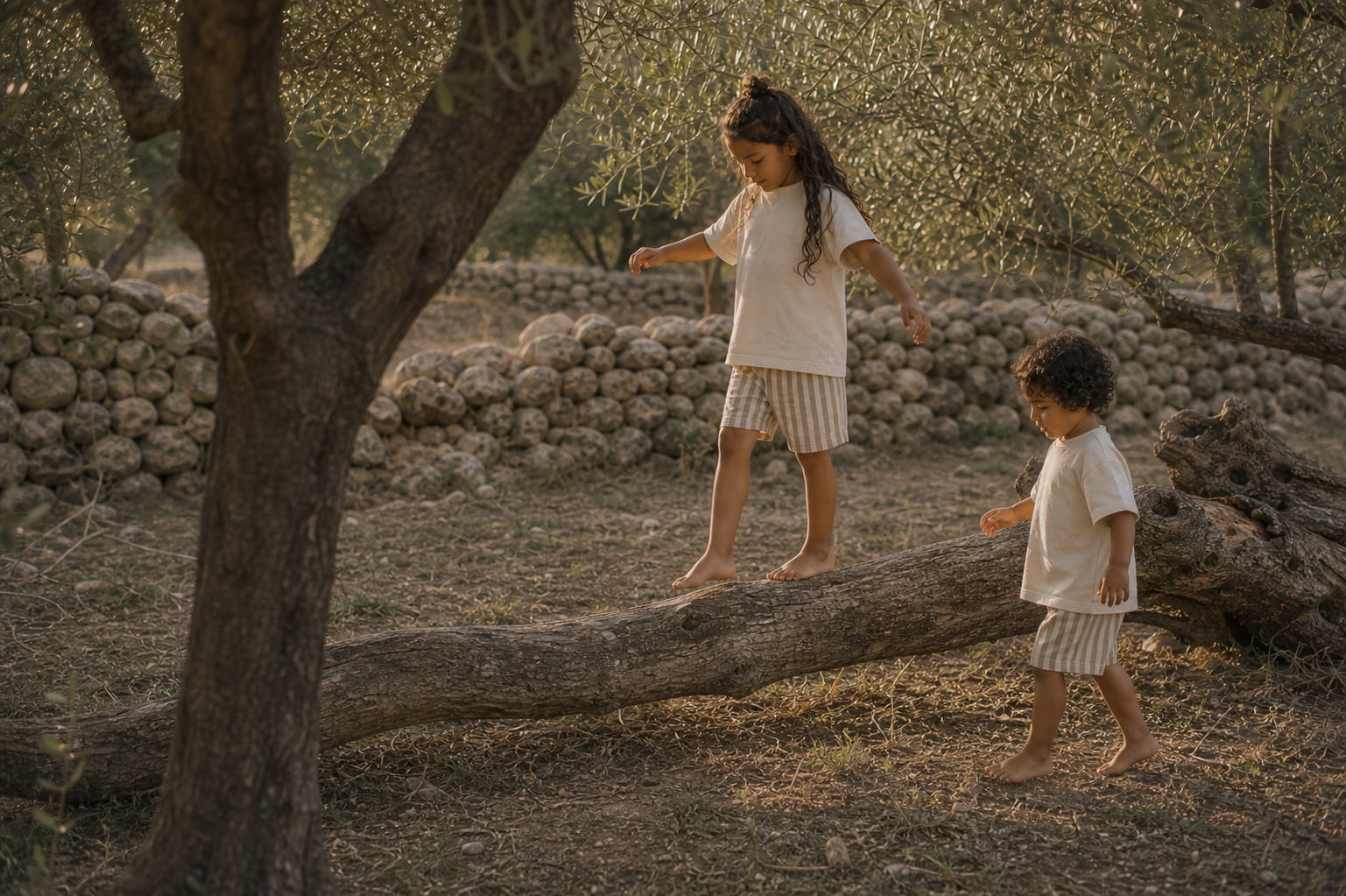
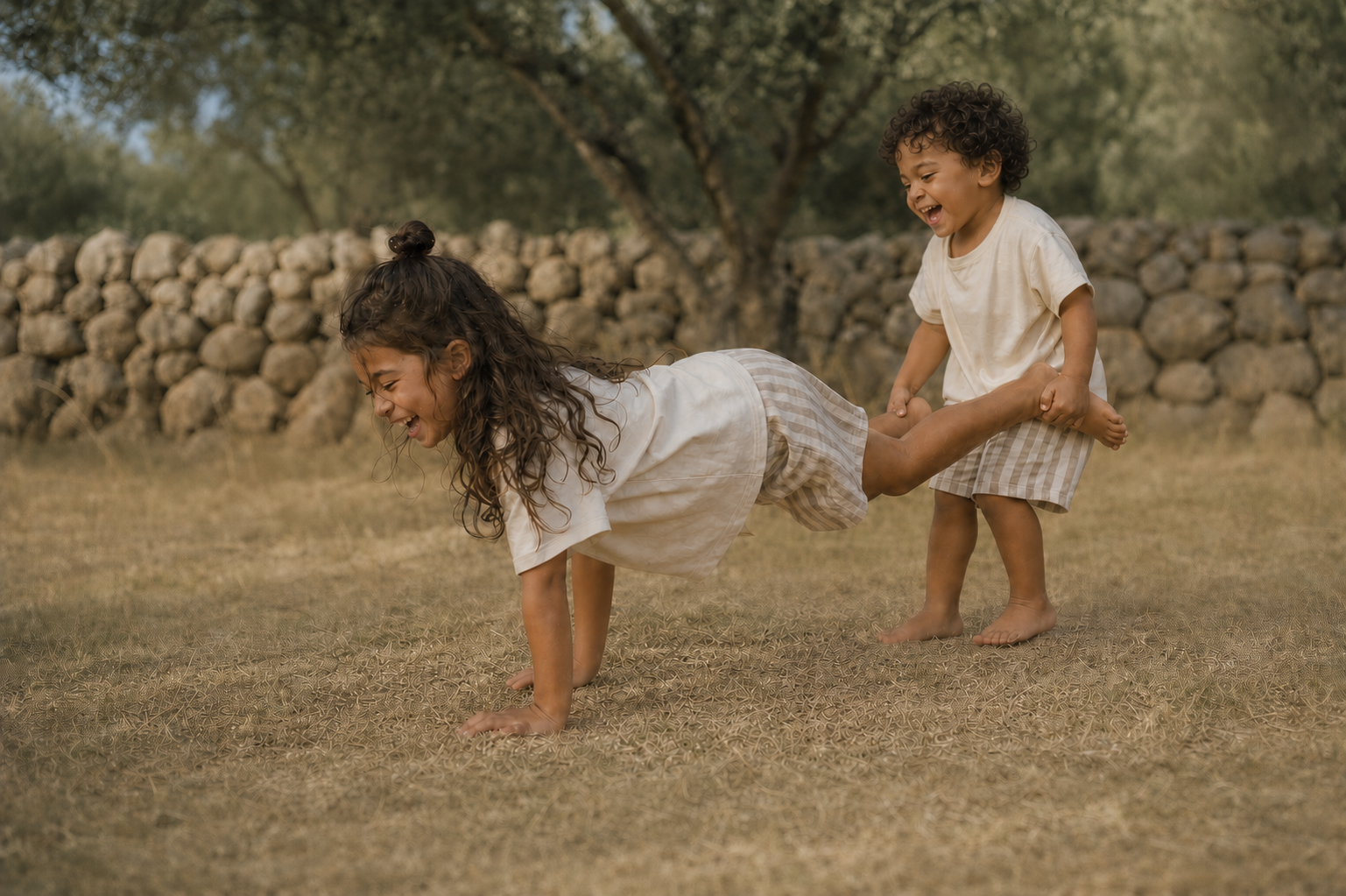
Climbing the tree that looked impossible from the ground, one branch higher than what feels safe. Jumping a stream at the point where the far bank actually requires the leap. Crossing a fallen log the full length of it, arms out, without looking down. Building an obstacle course no adult designed, then daring a sibling to beat your time. Crossing the creek on stones nobody has counted, one wrong step from wet shoes.
GAMES THAT BUILD LEADERSHIP
Leadership in childhood looks almost nothing like leadership in an office. It looks like a game nobody else knew how to start until one child decided the rules.
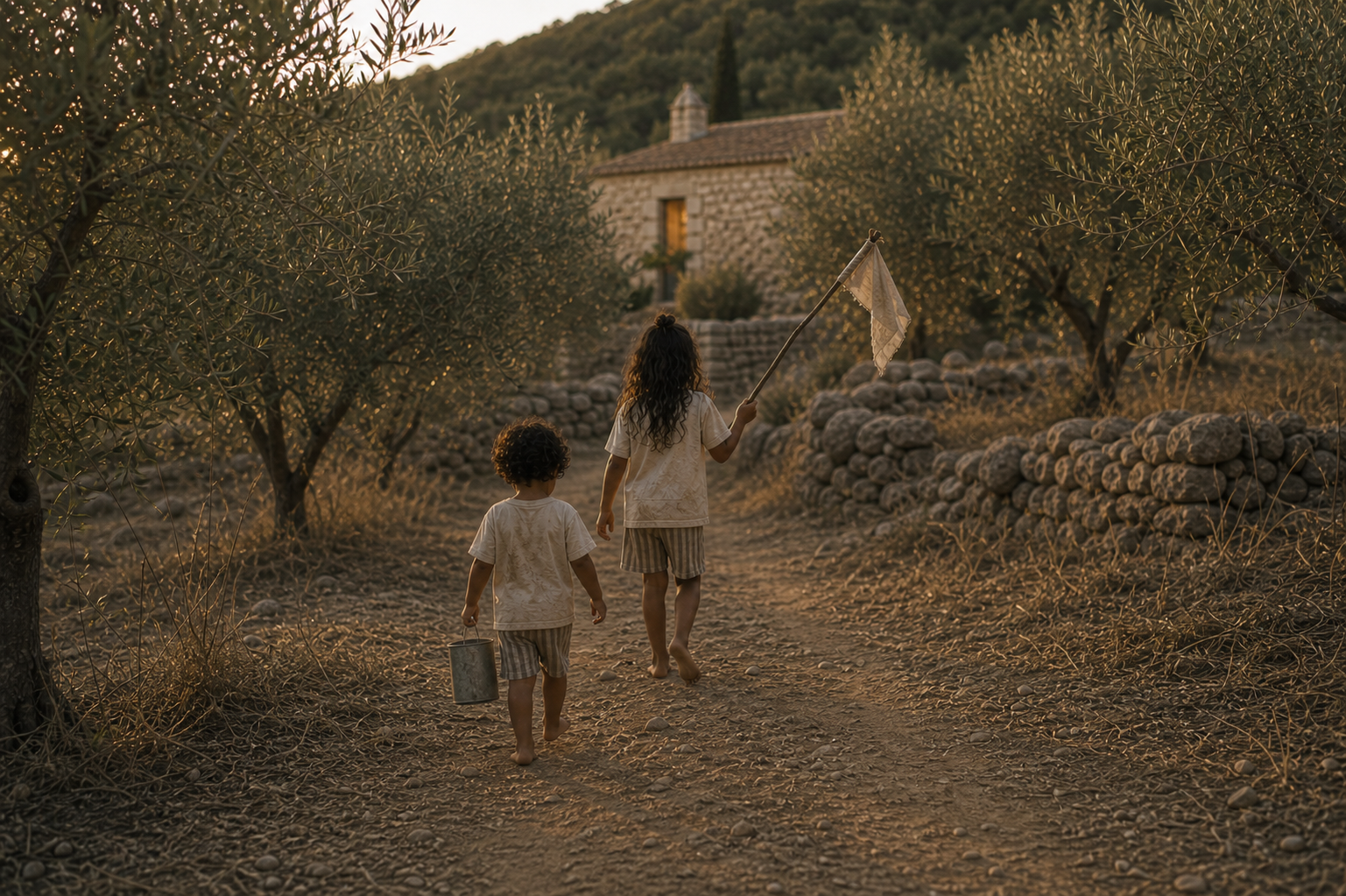
Capture the Flag, and the argument over boundaries that happens before a single flag is captured. A treasure hunt someone has to plan backward from the treasure. A club with a name, a password, and rules nobody outside it will ever fully understand. Assigning roles before an expedition — who carries the map, who carries the snacks, who goes first. Planning where the adventure will actually go, and talking three younger children into agreeing.
GAMES THAT SHARPEN OBSERVATION
Before a child can name what they're looking at, they have to notice it is there at all — which is its own kind of discipline, and one the world offers constant practice in, free of charge.
Following a set of animal footprints to find out where they actually lead. Naming every bird that lands in the garden before it flies off again. A scavenger hunt with a list written in a child's own handwriting. Lying in the grass long enough to find the one cloud that looks like something. A round of I Spy played with nothing but what creation already provided.
GAMES THAT TEACH STRATEGY
Strategy is thinking one step ahead of where you're standing — and few things teach it faster than a game where getting caught actually costs something.
Hide-and-seek in a garden every child already claims to know by heart. Sardines, which is hide-and-seek with the rules turned inside out. Flashlight tag on the one night it's allowed to stay up past dark. Fox and hounds across a field wide enough that the fox actually has a chance. Building a fort, and only then working out how it will need to be defended.
GAMES THAT BUILD ENDURANCE
There is a particular kind of character built only by finishing something the body wanted to quit ten minutes earlier.
A relay race with a baton that is whatever stick was nearest. Wheelbarrow races down a lawn too long for anyone's arms. A sack race that ends the same way it always ends, in the grass. Skipping rope until somebody's count reaches a number worth shouting about. A walk with an actual destination, chosen and reached on a child's own legs.
GAMES THAT CULTIVATE WONDER
Wonder doesn't need to be taught, only left room to happen — which is, itself, the entire argument of this article.
A tiny village built from moss, bark, and stones, no bigger than two open hands. A boat made of bark, launched to see how far the current will carry it. Flowers pressed flat between the pages of whatever book was nearest. Feathers collected and kept, for reasons a child doesn't yet need to explain. A nature journal with more drawings in it than words.
GAMES THAT BUILD INDEPENDENCE
Independence, for a child, is rarely dramatic. It is a string of small tasks completed without being asked twice.
Planning a picnic, packing it, and carrying it there without being asked. Building a shelter meant to actually hold, at least for one afternoon. Finding the way to a familiar destination without being told the turns. Packing an adventure bag the night before, the way sailors used to pack a trunk.
THE LOST ART OF BOREDOM
© 2026 Joanna Colomas Magazine
Somewhere in the last few decades, boredom became a problem to be solved instead of a doorway to be walked through. A child says the words "I'm bored," and we reach, almost without thinking, for a screen, a suggestion, a plan — anything to close the gap before it can open into something uncomfortable.
But that gap is exactly where every game above was born. No parent invented Capture the Flag. No curriculum wrote the rules for Sardines. They were built, one uneventful afternoon at a time, by children who had nowhere else to be and nothing else they were told to do.
One of the greatest gifts we can give children is not another activity. It is enough uninterrupted time for them to invent one.
It rarely feels like a gift in the moment. An empty afternoon can look, to a tired mother, like a failure to plan rather than an inheritance being handed down. But somewhere inside that emptiness a child is doing exactly what children have always done with it: deciding what the stick is for.
"Be still, and know that I am God" (Psalm 46:10) was never only an instruction for a grown woman trying to pray in a loud house. It is, in its own way, the oldest permission a child can be given — to stop, to have nothing assigned, and to discover, in the stillness, what was there to find all along.
CONTINUE THE ADVENTURE
Everything above is enough to fill a summer on its own — a stick, a stream, seven kinds of ordinary courage, and an afternoon with nothing assigned. Nothing in this article requires anything you don't already have.
But if you're the kind of mother who likes to hold these things in her hands — who wants somewhere to keep the map instead of losing it to the wind, somewhere to write down which fort held and which one collapsed on the third try — that's what The Forgotten Games Companion was built for.
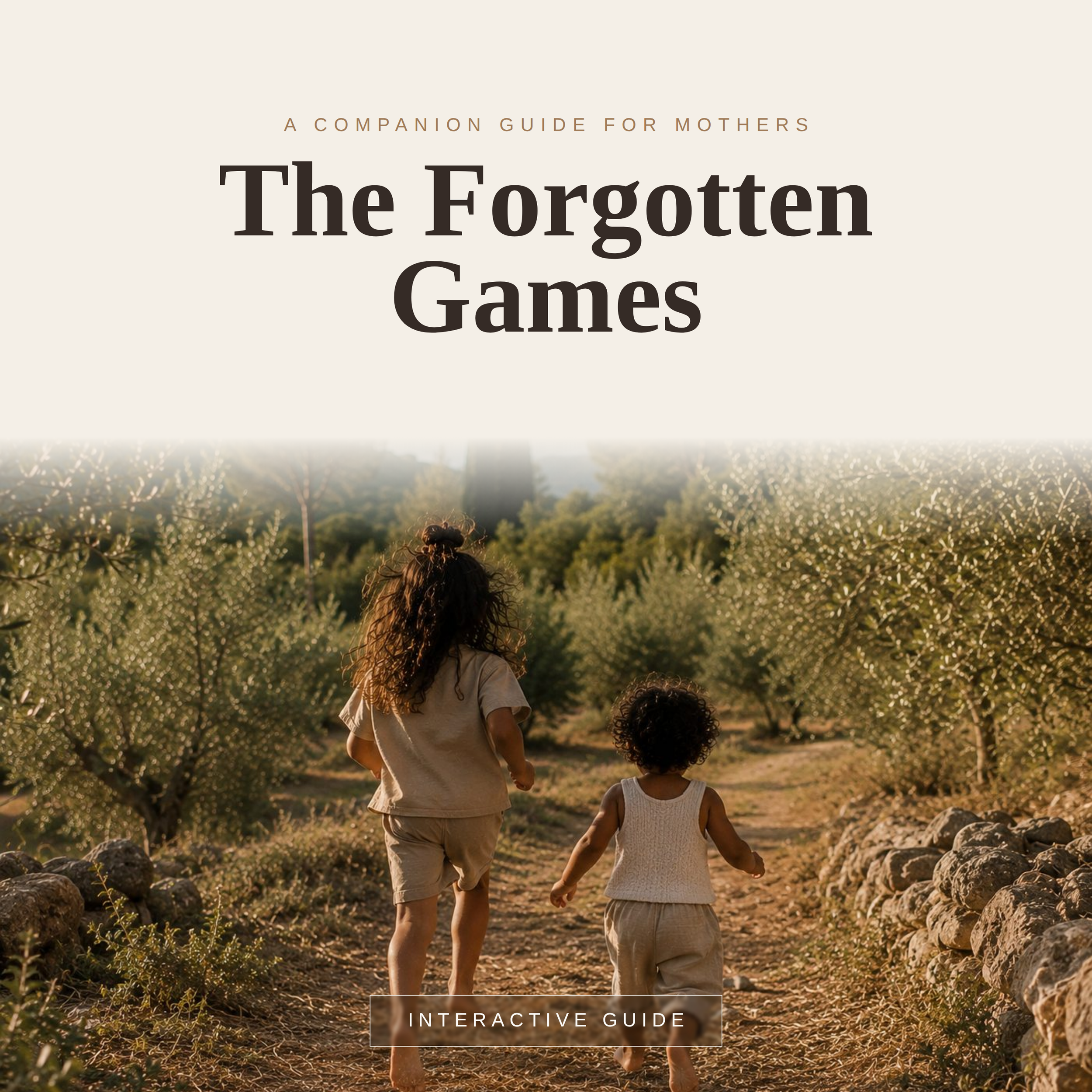
Give your children the summer you remember — the barefoot, unhurried, gloriously screen-free kind.
You know the childhood you want for them. Long days outside. A stick that becomes a sword. A fort at the bottom of the garden. Brothers and sisters inventing whole worlds out of nothing — and coming in at dusk, tired and happy and free.
This is the companion that helps you give it to them.
Inside are more than eighty forgotten games, a deck of fifteen you can print and keep in the picnic basket, and pages your children will fill with their own inventions, maps, and treasures. Not a screen in sight. Not a thing to buy. Just rope, a few old sheets, and the kind of summer they'll still be talking about when they're grown.
Why mothers keep coming back to it:
It does the thinking for you — open it, pick one idea, and the whole afternoon is handled.
It grows with your family — write your own versions, save your place, return to it summer after summer.
It hands the day back to your children — games that build courage, wonder, and the quiet confidence of a child who knows how to play.
It becomes a keepsake — one page, filled each summer, to be opened in twenty years.
And it simply works. Open it on your phone in the garden or your screen on the counter — nothing to download, nothing to figure out. It remembers everything you write. It reads beautifully by lamplight after they're asleep. And when you want a paper copy, the cards and keepsake pages are made to print.
This is the second companion in the Summer Companion Series — the play to its sister guide's capability. Together, they are a whole childhood.
The summer will come either way. This is how you make it one they'll never forget.
Please note: a digital product, opened in your browser on any device. Nothing is shipped; there is no file to manage. For one family's use.
It doesn't make the games work any better. Children have never needed help with that part. It exists only to make sure none of it is lost — the way a family recipe survives because somebody, eventually, wrote it down.
"We will not hide them from their children, shewing to the generation to come the praises of the LORD, and his strength, and his wonderful works that he hath done." — Psalm 78:4
Give them a stick. Give them an afternoon. Let them forget you're watching.
The best games really do leave nothing behind, except everything that matters.
© 2026 Joanna Colomas Magazine
Questions on Childhood and Play
A Few Things Mothers Often Wonder
Why are traditional childhood games still important?
Traditional childhood games give children room to practise courage, imagination, leadership, cooperation and independence without turning those qualities into formal lessons. A fort that collapses, a stream that must be crossed or a game whose rules need settling quietly teaches resilience, judgment and responsibility.
What are some simple outdoor games children can invent?
Children can build shelters, draw treasure maps, launch bark boats, follow animal tracks, create obstacle courses, organise expeditions or turn sticks and stones into an imagined world. The invitation is simple: offer time and freedom, then leave enough space for the game to become their own.
How can I encourage imaginative play without planning more activities?
Begin by protecting unhurried time. Give children access to ordinary, open-ended materials such as sticks, stones, rope, baskets, fabric, chalk or cardboard, then resist deciding what those things should become. Imaginative play often arrives only after the first discomfort of having nothing assigned.
Is boredom actually good for children?
Boredom can be the empty doorway through which invention enters. When every pause is immediately filled, children have little reason to create their own ideas. Given time, safety and freedom, “I’m bored” can slowly become a fort, a race, a collection, a story or an afternoon remembered for years.
Do children need lots of toys for meaningful play?
No. Some of the richest childhood play begins with materials that have no fixed purpose: a fallen branch, a piece of string, smooth stones, a blanket, a patch of earth or a shallow stream. Because these things do not tell children how to use them, imagination is free to lead.
How does outdoor play help build character?
Outdoor play asks children to make real decisions. They judge whether a branch will hold, wait for a younger sibling, solve disagreements, carry what they packed and continue when something fails. These small, repeated choices become an early education in courage, patience, stewardship and care for others.
How can families pass old-fashioned games on?
Families pass games down by playing them, remembering them and letting older children teach younger ones. A parent may show a child how to skim a stone, build a bark boat or begin Capture the Flag, then step back. What starts as instruction soon becomes family tradition.
You Might Love…
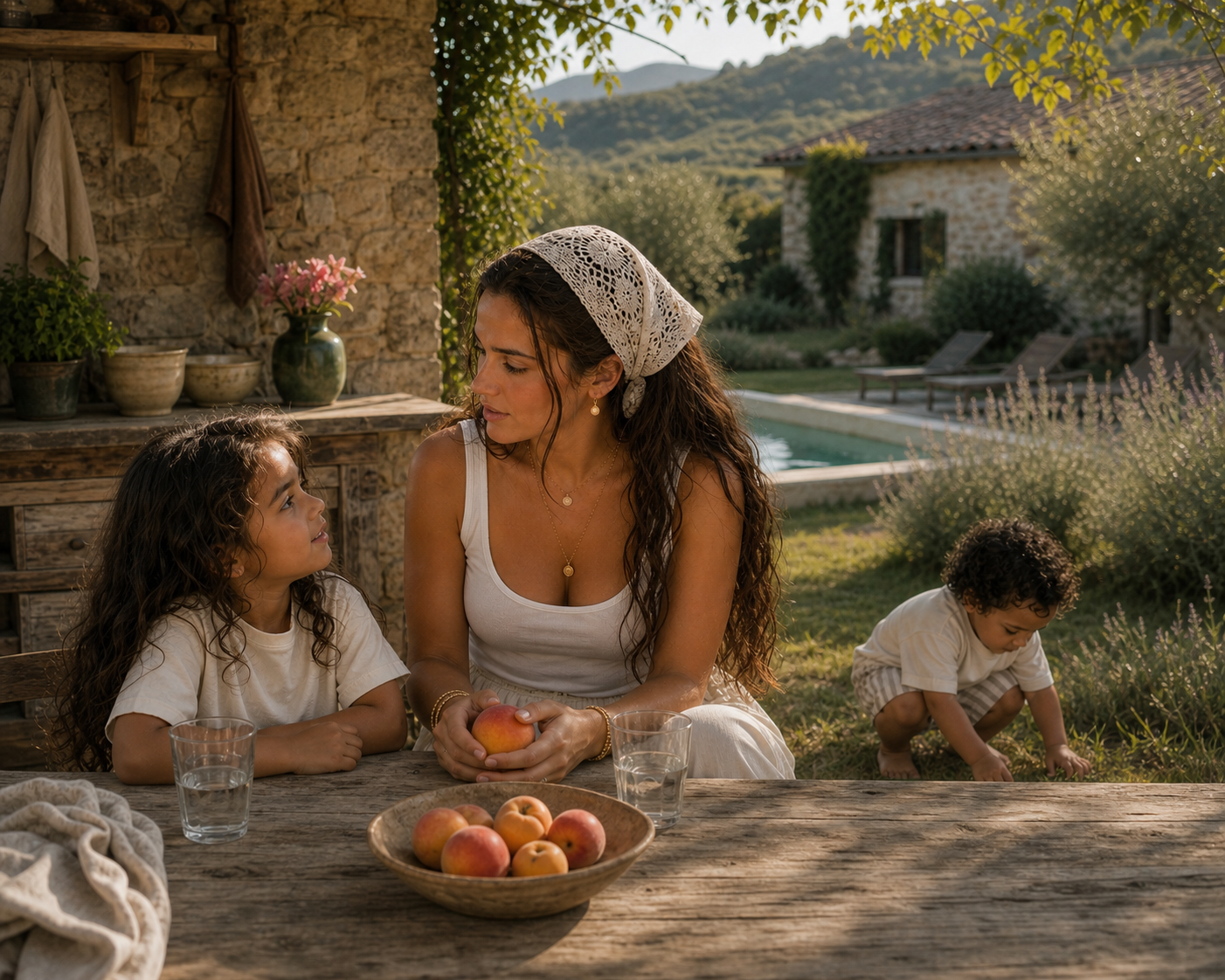

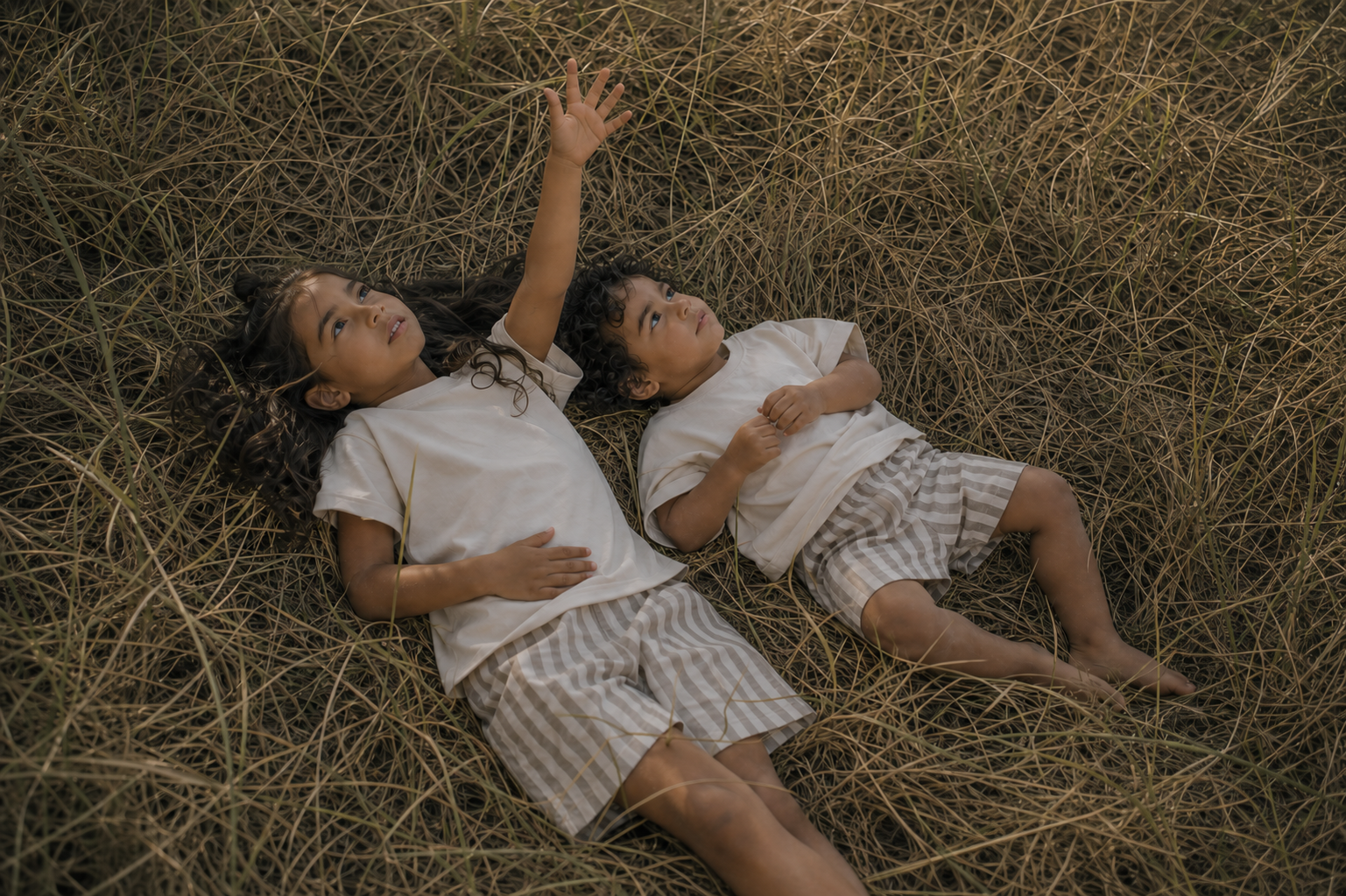



Long before children can explain what beauty is, they are learning what is worth stopping for. This intimate reflection considers how a mother’s attention—to creation, music, goodness, food and ordinary family life—can teach her children to notice the beauty already present around them.